
They are visible in nearly every neighborhood in Florida: black streaks on roofs that are otherwise healthy. Roof algae can return within a year or two of cleaning, and Florida’s heat, humidity and frequent rainfall make it a perfect environment for algae.
When you are cleaning your roof or you are hiring someone to clean it, the chemical that you are using is as important as the method. Let’s compare sodium hypochlorite, oxygen bleach and other roof cleaners, what Florida roofing professionals use, and how to safeguard your roof, plants and warranty.
What’s Causing Those Black Streaks?
Those dark streaks usually aren’t dirt or mold. The most common algae that cause roof discoloration is Gloeocapsa magma, according to the Asphalt Roofing Manufacturers Association (ARMA). The algae are spread in the air and create a dark pigment to shield them from the sun. ARMA says the issue is most prevalent in the Gulf States and along the Eastern Seaboard, placing Florida in the danger zone.
Algae are not the only ones to blame. Florida roofs can also grow lichen, moss in shaded areas, and mildew, especially on north-facing slopes and under trees.
Sodium Hypochlorite: The Industry Standard
Sodium hypochlorite (SH) is the active ingredient in liquid chlorine bleach and pool chlorine. It is the most popular chemical used by professionals for roof cleaning because it is effective in killing algae, mold and mildew and in removing the dark staining.
Roofing manufacturers back it, too. ARMA says algae discoloration may be lightened with a solution of household bleach and water, and suggests a typical mix of one part chlorine bleach to one part water. Owens Corning offers the same advice.
How pros use it: Professionals typically buy 10% to 12.5% sodium hypochlorite and dilute it to a working strength of about 2% to 4% for most asphalt shingle roofs. In Florida, concrete and clay tile roofs are more prevalent and may require a slightly stronger mix due to the greater staining.
Pros:
- Rapid, immediate results, sometimes in minutes
- Kills algae, mold, mildew, and lichen
- Supported by shingle industry guidance
- Affordable
Cons:
- May injure or kill plants and grass if not properly controlled
- May corrode metal and stain some surfaces if not rinsed off
- Needs appropriate protective equipment and handling
- Results are not permanent and growth can return over time
Oxygen Bleach: The Gentler Alternative
Oxygen bleach is typically sodium percarbonate, a powder that releases hydrogen peroxide when it comes into contact with water. Hydrogen peroxide is converted to water and oxygen, making it more attractive for homes with sensitive landscaping, pets, or rainwater collection.
Pros:
- Said to be less harmful to plants, metal flashing and gutters
- Less smell than chlorine bleach
- Effective on light algae and dirt
Cons:
- Slower working speed and may require longer dwell time
- Not as effective on long-established, heavy algae growth
- May need more brushing or rinsing to achieve a clean result
Oxygen bleach may not provide the results homeowners are looking for on many Florida roofs that have thick black streaks. It is best for light buildup, maintenance cleaning or places where bleach is not appropriate.
The Florida Pros’ Secret Weapons
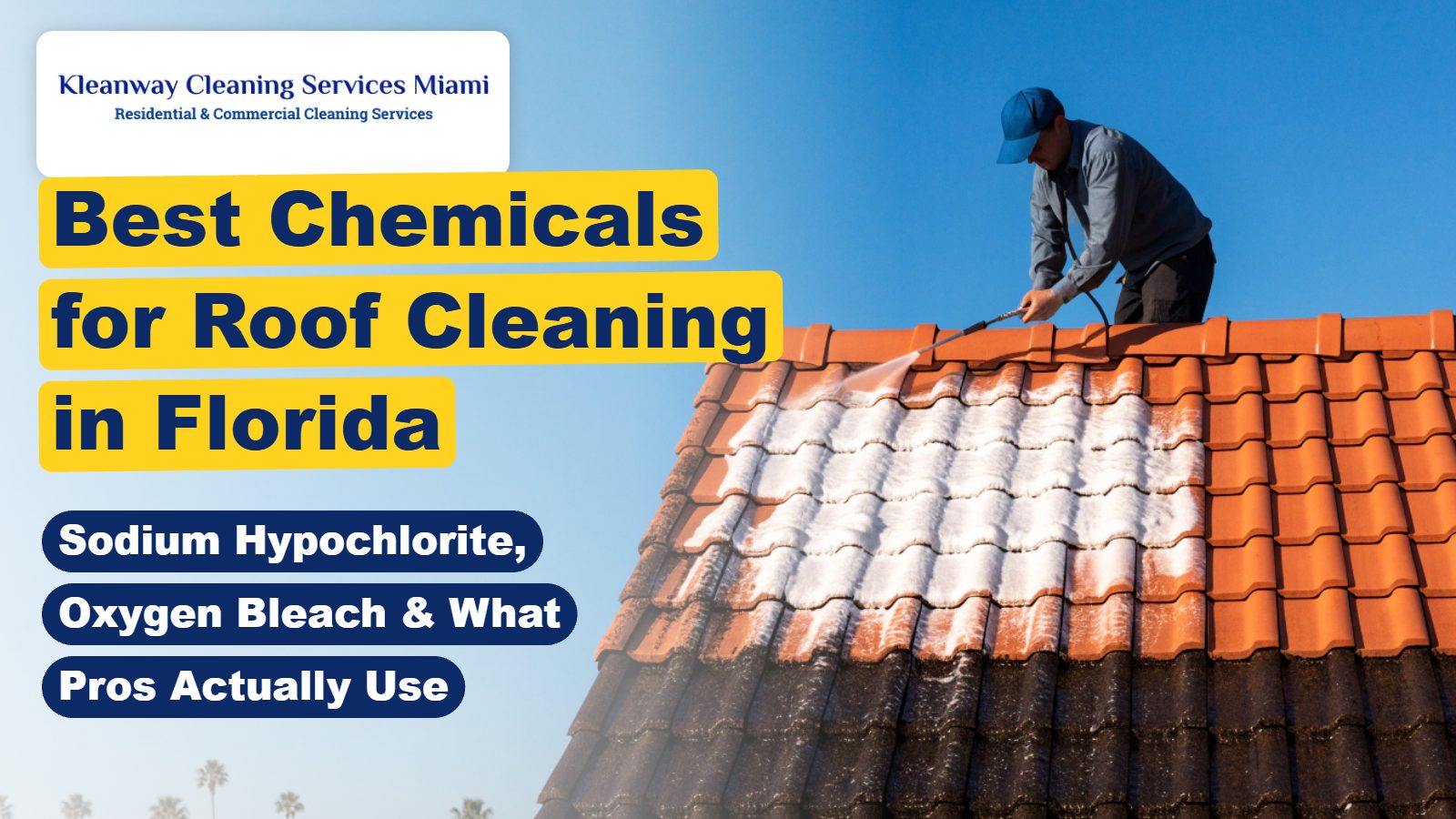
Most professional roof cleaners in Florida use a process called soft washing: a low-pressure application of a cleaning solution that kills growth chemically instead of blasting it off. A basic pro setup consists of:
- Sodium hypochlorite solution at the appropriate concentration for the roof type and degree of staining
- A surfactant that is safe for the roof and aids in the solution’s adhesion to the roof and penetration of algae colonies
- Water to dilute the mix and to rinse plants, walls, windows and other surfaces around the home
- Plant protection, such as pre-wetting landscaping and, in some instances, applying a neutralizer such as sodium thiosulfate to plants
The solution is applied at low pressure, typically from the bottom of the roof up, to allow the solution to dwell evenly. Gutters and downspouts are sometimes rerouted or cleaned out to prevent heavy runoff from accumulating around plants.
Pros also don’t use a stronger mix than they need. A “hotter” mix is not necessarily a better cleaner, but it is more likely to cause damage to landscaping.
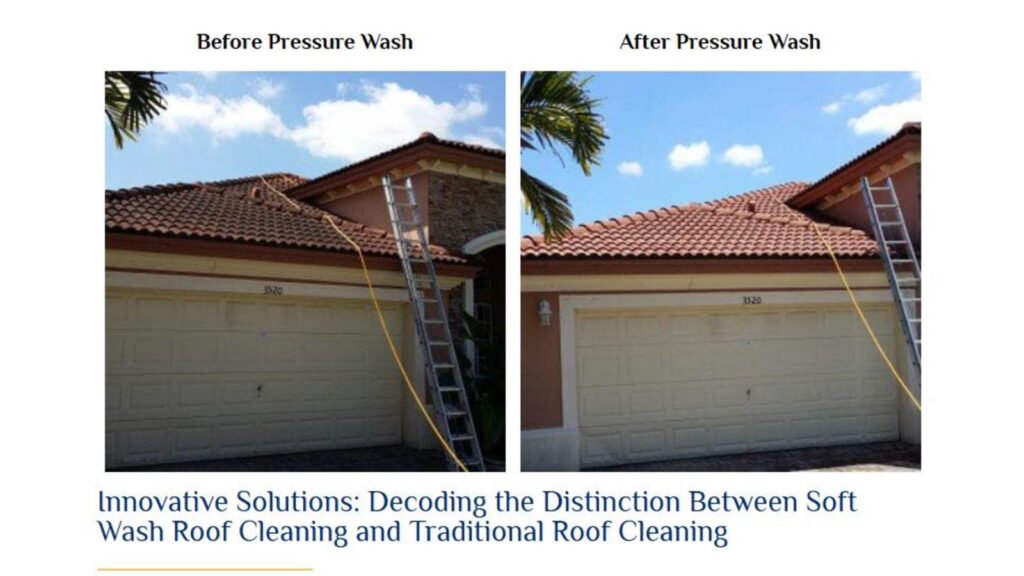
Matching the Chemical to Your Roof Type
Asphalt shingles: Diluted sodium hypochlorite solution and low pressure only. Pressure washing will remove the protective granules and many manufacturers will warn against it.
Concrete tile: Widely used throughout Florida, concrete tile is porous and can harbor algae. It is usually very responsive to soft washing with sodium hypochlorite, sometimes a little stronger mix.
Clay tile: Glazed clay tile is easier to clean than unglazed tile. Be careful as clay can crack when walked on.
Metal roofs: Chlorine may cause corrosion if it is allowed to remain on metal. Rinse thoroughly or use an oxygen-based cleaner, according to the manufacturer’s instructions.
Chemicals and Methods to Avoid
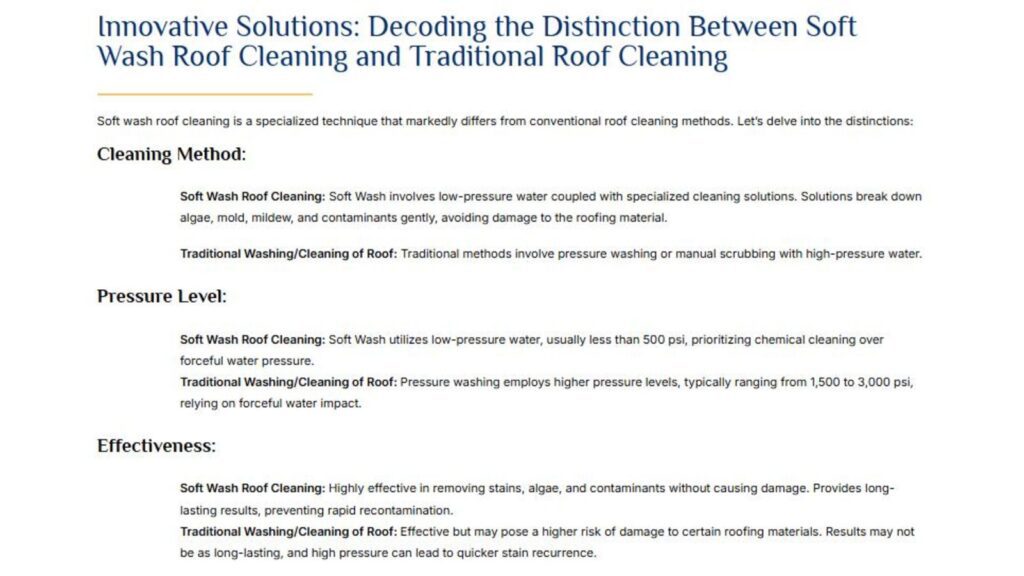
- High-pressure washing. It can cause shingle and tile damage and could invalidate your roof warranty.
- Mixing bleach with ammonia or acids. These combinations form toxic gases.
- Harsh acid cleaners (unless approved for your roof type).
- Unapproved chemicals. ARMA does not recommend any other cleaning chemicals or methods unless approved by the shingle manufacturer.
Florida Roof Cleaning Safety Tips
- Work during cooler hours. The solution dries out too fast in the Florida sun. Best time is early morning or late afternoon.
- Avoid windy days, because overspray can be carried to plants, cars and neighbors’ property.
- Protect landscaping and pools. Water plants before and after and protect sensitive landscaping.
- Respect runoff rules. Numerous cities and counties in Florida have regulations that limit the types of cleaning chemicals that can be discharged into storm drains. Check your local stormwater regulations.
- Prioritize fall safety. Wet roofs are slippery and falls are the greatest risk in roof cleaning.
FAQ
How often should a Florida roof be cleaned?
Many Florida homeowners clean their roofs every 1-3 years, depending on the shade, roof color, and the rate of algae regrowth. If you live near a tree, lake or the ocean, you may need to clean your roof more frequently.
Can I prevent algae from coming back?
Yes, to a degree. Regrowth can be slowed by zinc or copper strips near the roof ridge, and algae-resistant shingles containing copper granules are a good choice when it’s time to replace your roof. Pruning trees that overhang is also helpful.
Should I clean my roof myself or hire a professional?
Experienced DIYers with the right safety equipment might be able to handle a small, low-slope roof. Most Florida homes, particularly two story homes and tile roofs, are better off hiring an insured soft-wash professional, as it is safer and typically provides better results.
Need help? Call Kleanway at 305-247-3532 for a free estimate.

