

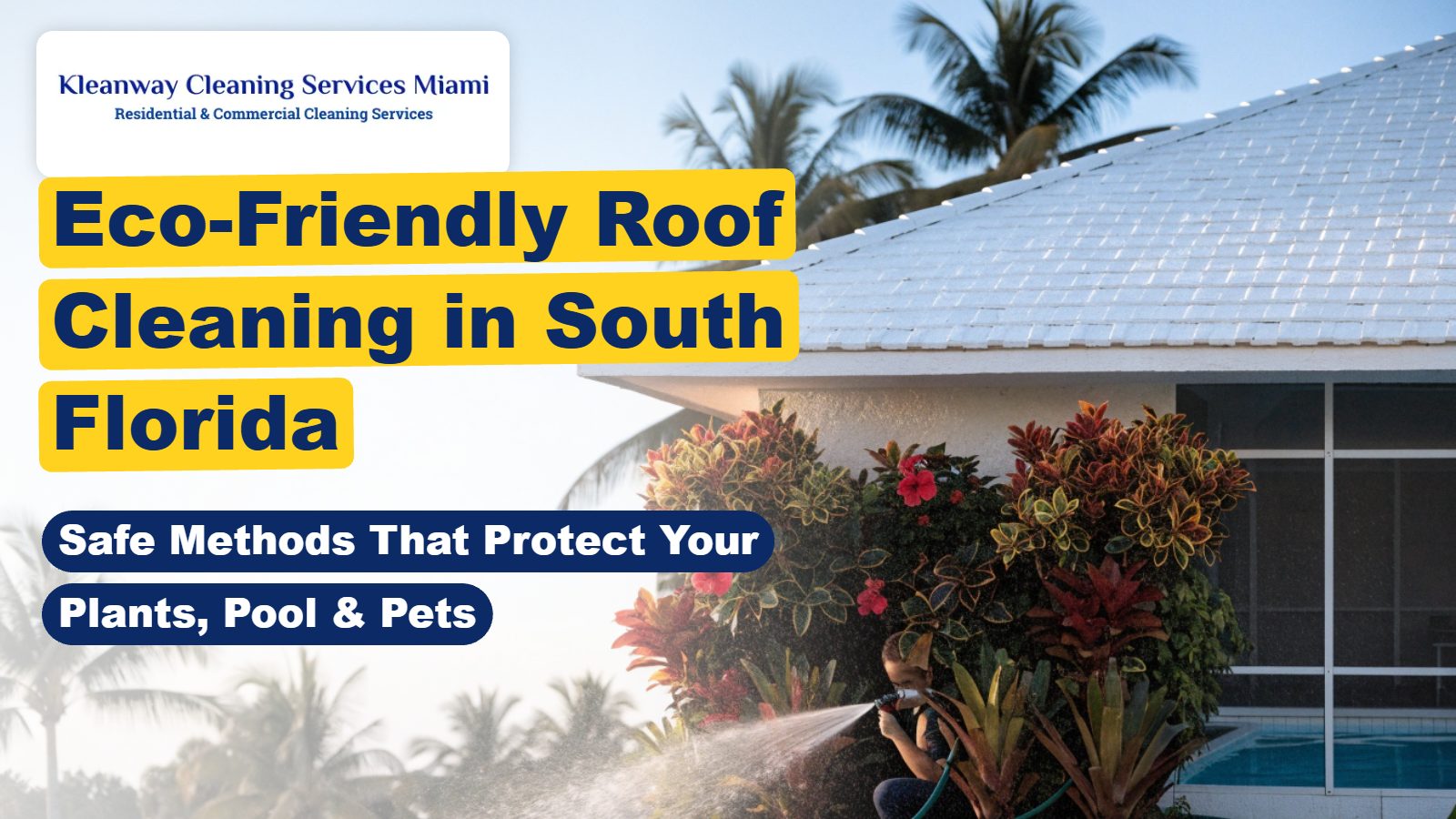
A clean roof in South Florida is frequently over a yard that’s worth saving: tropical landscaping, a screened-in pool, pets that live half their lives outdoors, and in many communities, a canal or waterway just beyond the backyard. Thus, when you notice black algae streaks on your roof, you want to eliminate them without harming anything around your home.
Fortunately, there are ways to clean roofs in an eco-friendly manner. It’s not so much about the “green” label and more about the process of cleaning. This is what safe roof cleaning in South Florida really looks like and how to keep your plants, pool, pets and local waterways safe.
The True Meaning of “Eco-Friendly” Roof Cleaning
There are numerous companies that offer “green” or “eco-friendly” roof cleaning. A responsible approach typically involves:
- Soft washing using low pressure, rather than high pressure blasting that can damage roofs and spread debris
- The correct cleaning method at the lowest effective level of strength
- Protecting plants, pools, and surfaces carefully before, during and after cleaning
- Managed discharge, not into storm drains or canals
- Prevention that decreases the frequency of roof cleaning
A company that uses a gentle product irresponsibly can do more damage than one that uses a stronger product responsibly. Process matters.
Roof Cleaning Solutions That Are Eco-Friendly
Soft Washing Using Properly Diluted Sodium Hypochlorite
The most common solution used by most South Florida roof cleaning companies is a diluted solution of sodium hypochlorite (the active ingredient in bleach) and a biodegradable surfactant. It is the most effective method of eliminating the algae that causes black roof streaks, and is the method recommended by shingle manufacturers. When used properly, at controlled strength with good plant protection, it can be a responsible choice.
Oxygen-Based Cleaners
Cleaners containing hydrogen peroxide or sodium percarbonate (also known as oxygen bleach) decompose into water and oxygen. They are less aggressive towards plants and metal, but slower and can have trouble with heavy algae. They are suitable for light growth or for homes that have particularly delicate landscaping.
Slow-Acting “Spray and Leave” Treatments
Others are sprayed on the roof and allowed to slowly take effect, with the rain washing away the growth over weeks or months. They are easy and low impact, but they do not have an immediate effect.
To learn more about comparing roof cleaning chemicals, check out our guide to the best chemicals for roof cleaning in Florida.
Plant Protection
Cleaning runoff can damage South Florida landscapes, including hibiscus, crotons, palms and bromeliads, if not properly protected. The rule of thumb for experienced soft-washers is to keep plants wet with fresh water.
- Pre-soak. Water plants, leaves and soil thoroughly before cleaning. Plants that are hydrated will absorb less of the cleaning solution.
- Keep them moist while working. One crew member should water plants while the other cleans.
- Rinse thoroughly afterward. Wash away leaves, stems and soil around plants after cleaning.
- Use a neutralizer. Many professionals use a plant-safe neutralizing rinse to neutralize any cleaning solution that may be left behind.
- Avoid plastic tarps in hot weather. Plastic can cause heat stress to plants under Florida’s sun. Water is typically a better cover.
- Manage downspouts. Redirect or lengthen downspouts to prevent heavy runoff from pooling around flower beds.
How to Protect Your Pool and Screen Enclosure
Pools, lanais and screen enclosures are common in South Florida and require special care when cleaning roofs.
- Inquire about pool protection. Talk to your roof cleaner about covering the pool or how they will prevent runoff and debris from entering the pool.
- Rinse the enclosure. Fresh water should be used to rinse aluminum frames, screens, pool decks and pavers after cleaning.
- Check your water. After cleaning, test the chemistry of your pool, operate the filter and skim any debris that may have fallen into the pool.
- Protect outdoor furniture. Relocate cushions, grills and outdoor furniture away from the roof line.
Tips on Keeping Pets Safe
Don’t mix cleaning products and pets.
- Keep pets indoors during the cleaning and until surfaces are rinsed and dry
- Take water and food bowls, toys and bedding out of the yard
- Watch for puddles. Avoid allowing pets to drink from any water that is left standing around the home after cleaning.
- Take special precautions with birds. Birds are particularly susceptible to the fumes from cleaning products, so keep them away from the work area, according to the ASPCA.
Diluted household bleach products are typically mild irritants, whereas concentrated bleach is much more hazardous, according to the Merck Veterinary Manual. If you think your pet has been exposed, contact your veterinarian or the ASPCA Animal Poison Control Center at (888) 426-4435.
Protecting South Florida’s Waterways
Many homes in South Florida are located near canals, lakes, Biscayne Bay or the Intracoastal Waterway, and storm drains frequently lead to these water bodies. Local governments are not taking this lightly. For instance, the City of West Miami has a policy against illegal discharges into its storm drain system and recommends that pressure washers do not use hazardous cleaning products like bleach and that they plug storm drains.
To protect local waters:
- Keep runoff out of storm drains, street gutters and canals
- Use only as much solution as needed
- Ask your roof cleaner how they manage runoff
- Check your city or county’s stormwater rules before cleaning
Prevention Is the Most Eco-Friendly of All Options
The less often your roof needs cleaning, the less impact cleaning has. Try these steps:
- Cut back trees that overhang to allow more sunlight and less debris
- Install zinc or copper strips close to the roof ridge to slow algae regrowth
- When replacing your roof, opt for algae-resistant shingles with copper granules
- Maintain clean gutters for proper drainage
Questions to Ask an Eco-Friendly Roof Cleaner
- What cleaning solution do you use and what is the strength?
- What do you use to keep plants, pools and screen enclosures safe?
- What do you do with the runoff around storm drains and canals?
- Do you have insurance and references in the area?
FAQ
What’s the best time to clean a roof in South Florida?
Many homeowners prefer to have their roofs cleaned during the dry season (November to April) when the weather is cooler and there are fewer afternoon storms, allowing the cleaning solution to be effective. Early morning appointments help year round.
Is it necessary to be home when the roof is being cleaned?
Not always, but it helps to walk the property with the crew before they start. Identify sensitive vegetation, pool facilities, pet areas and other locations where water flows into a canal or storm drain.
How long does a roof cleaning take?
The typical time for a residential soft-wash roof cleaning is a few hours, depending on the size, pitch, material and level of staining. Plant and pool protection takes a few minutes but it’s worth it.
Need help? Call Kleanway at 305-247-3532 for a free estimate.

