


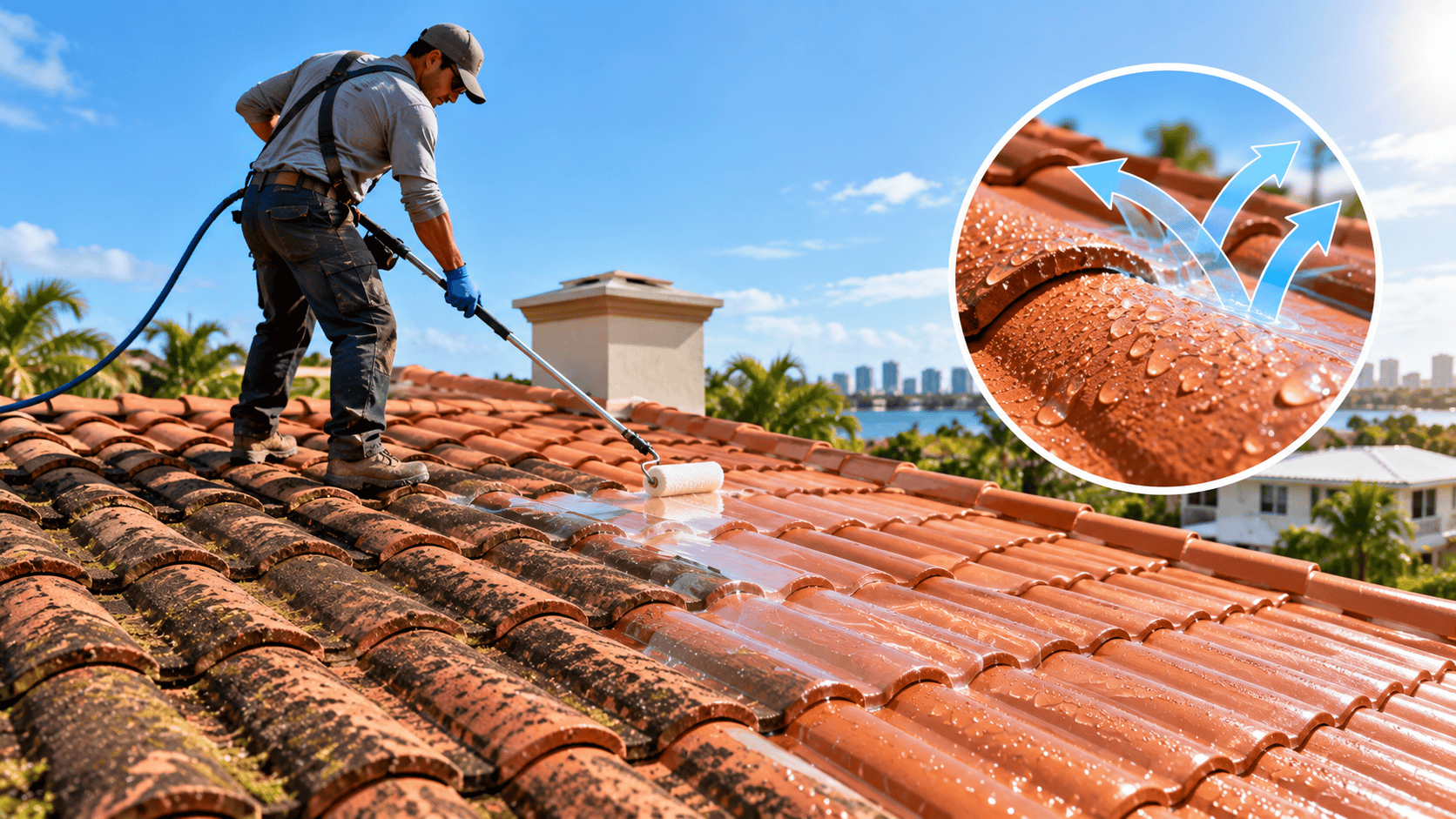
A tile roof is a popular choice for homeowners because of its durability, attractive appearance, and ability to withstand different weather conditions. However, even a well-built tile roof can develop problems over time due to moisture, heavy rain, changing temperatures, and natural wear and tear. Without proper maintenance, these issues can lead to leaks, mold growth, and costly roof repairs.
Tile roof sealing is an effective way to protect your roof from moisture-related damage and extend its lifespan. It helps reduce water penetration, preserve the roof’s condition, and maintain the overall appearance of your home. Understanding how tile roof sealing works and when your roof needs it can help you make informed decisions about roof maintenance.
What Is Tile Roof Sealing?
Tile roof sealing is the process of applying a suitable protective coating or sealant to roof tiles to help reduce moisture penetration and protect the roofing surface from environmental damage. Depending on the roofing material and the product used, sealing can also improve resistance to dirt, algae, and other external elements.
Roof tiles are commonly made from clay, concrete, or other durable materials. Although these materials can last for decades, some tiles are porous and may absorb moisture over time. Repeated exposure to rain, sunlight, and temperature changes can gradually affect their condition.
A professional tile roof sealing service typically involves inspecting the roof, cleaning the tiles, repairing damaged areas, and applying a compatible sealant when appropriate.
It is important to understand that roof sealing does not replace proper waterproofing, flashing, underlayment, or drainage systems. Instead, it serves as an additional layer of protection when the roof’s condition and materials make sealing beneficial.
How Can Tile Roof Sealing Protect Your Roof from Water Damage?
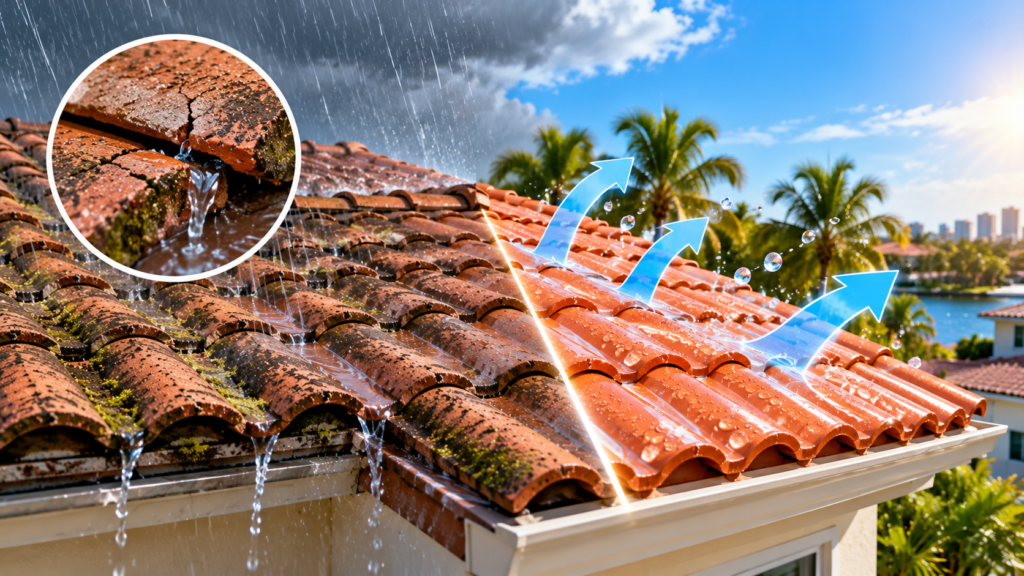
Water damage is one of the most common concerns for homeowners, especially in areas that experience frequent rainfall or severe weather. Tile roof sealing can help minimize several moisture-related problems.
Reduces Water Absorption
Some clay and concrete roof tiles contain tiny pores that allow them to absorb moisture. Over time, repeated water absorption can contribute to deterioration, particularly when combined with temperature fluctuations and other environmental conditions.
An appropriate sealant can reduce the amount of water absorbed by porous tiles. This assists in safeguarding the roofing material and minimizes extended exposure to moisture.
But not every roof tile needs to be sealed. There are products that might not be compatible with some tiles and thus it is important to select the appropriate treatment.
Helps Prevent Roof Leaks
Leaks on the roof are not necessarily caused by broken tiles. Broken tiles, rotting flashing, clogged valleys, and issues with the underlayment can also permit water to get into your house.
Sealing tile roofs may offer extra protection to other compatible roofing materials, but cannot seal all sources of leakage. A roofing expert must find out the source of any existing leaks and repair them before applying a sealant.
These issues can be tackled at an early stage to ensure that water does not get to the ceilings, walls, insulation, and other interior surfaces.
Protects Against Mold and Mildew
The dampness under roof tiles or in the attic may provide good conditions to the development of mold and mildew. These issues can harm construction materials, create unpleasant smells, and impact indoor air quality.
Tile roof sealing can assist in a drier roofing system by assisting in the reduction of moisture uptake in appropriate roofing materials. It does not, however, kill mold itself. It should also have proper ventilation, drainage and prompt repair of leaks.
Minimizes Weather-Related Wear
Roof tiles are constantly subjected to sun, wind, rain, dust and temperature variations. These circumstances may slowly deteriorate roofing materials and influence their look.
A proper roof coating can provide extra protection against the elements and conserve the surface of the tiles depending on the product. Certain coatings may also minimize the accumulation of dirt and organic growth.
For the best results, choose a product designed specifically for your tile type and local climate.
Other Benefits of Tile Roof Sealing
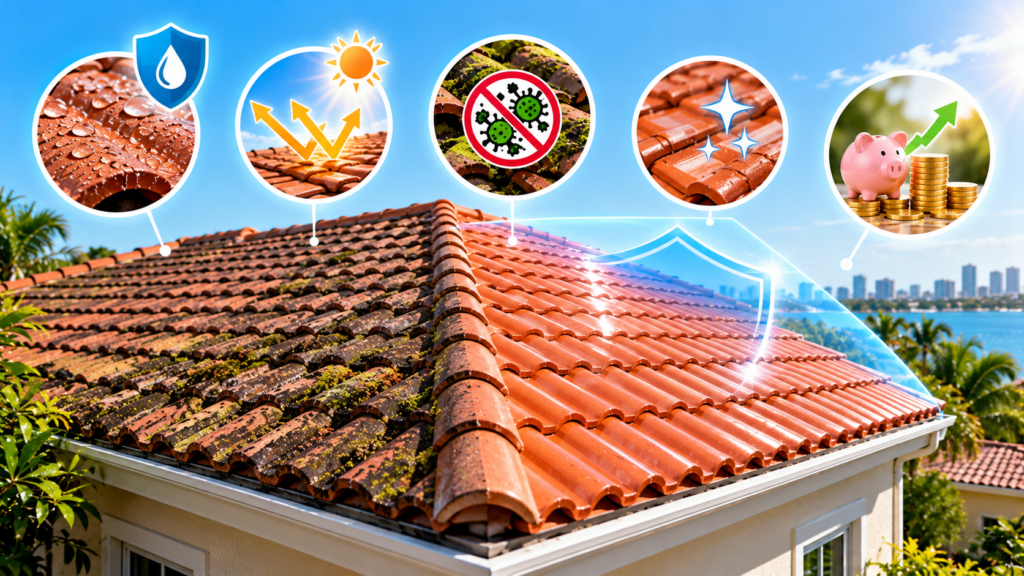
In addition to helping protect against moisture, tile roof sealing offers several potential benefits.
Extends roof service life: Reducing moisture exposure and maintaining the tiles can help preserve the roof when combined with regular inspections and necessary repairs.
Improves curb appeal: Certain sealants can enhance the color or finish of roof tiles and help keep the roof looking cleaner.
May reduce maintenance needs: Some coatings cause surfaces to be more readily cleanable and may delay the build-up of dirt or organic growth.
Supports long-term cost savings: Preventing avoidable deterioration and identifying roofing problems early may reduce the risk of expensive repairs.
The advantages are determined by the current state of the roof, the type of tiles and the sealant used. Sealing is not supposed to be a panacea to all the roofing issues, but it should be a part of a larger roof maintenance program.
When Should You Seal Your Tile Roof?
There is no single schedule that works for every tile roof. The right time depends on the roof’s age, material, climate, exposure to moisture, and the manufacturer’s recommendations.
Have your roof inspected in case you notice:
- Cracked, broken, or visibly deteriorating tiles.
- Water stains on ceilings or walls.
- Persistent moss, algae, or other organic growth.
- Signs of moisture in the attic.
- Deteriorating roof coatings or unusual surface discoloration.
A professional inspection can determine whether sealing is appropriate or whether repairs, improved drainage, or underlayment replacement are needed first.
Avoid applying sealant simply because your roof has reached a certain age. Some tiles are designed to remain unsealed, and an unsuitable coating can trap moisture, affect the roof’s appearance, or interfere with the material’s natural properties.
What Is the Tile Roof Sealing Process?
Professional tile roof sealing generally follows a few important steps.
Roof inspection: The contractor examines the tiles, flashing, valleys, drainage areas, and other components to identify existing damage and potential water entry points.
Roof cleaning: Dirt, moss, algae, and loose debris are removed using methods suitable for the tile material. Excessive water pressure can damage tiles, so careful cleaning is important.
Necessary repairs: Cracked tiles, damaged flashing, and other roofing defects are repaired before sealing begins.
Sealant application: A compatible sealant or protective coating is applied according to the manufacturer’s instructions. Surface preparation, drying time, and weather conditions can affect the final result.
Final inspection: The completed work is inspected to confirm that the coating has been applied appropriately and that identified roofing issues have been addressed.
Hiring an experienced roofing professional can help ensure that the correct materials and techniques are used.

