
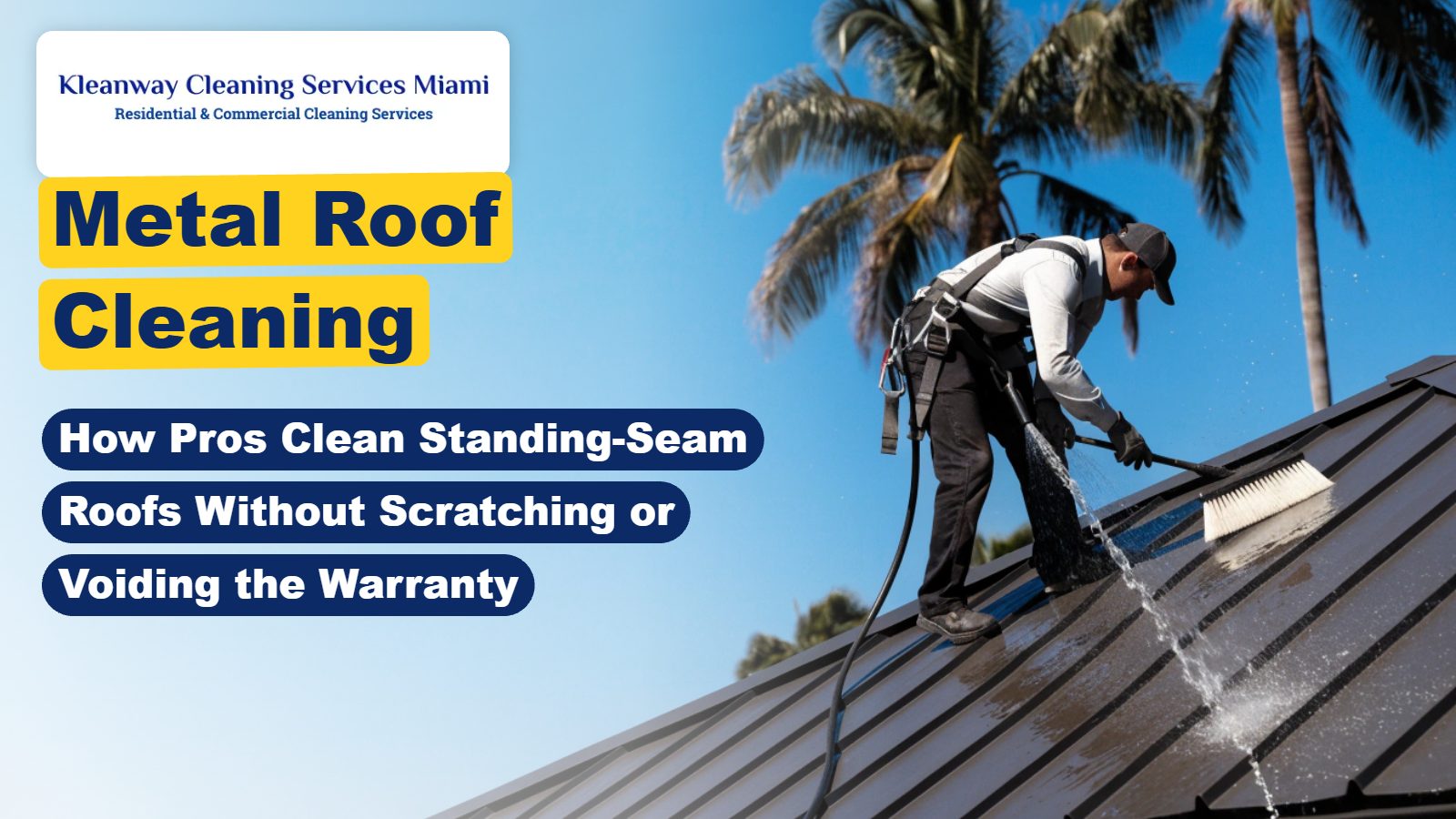
The standing seam metal roof is designed to be used for long periods of time, however, for it to look good, a thin, factory applied finish is required. Scratch the finish, blast water between seams, or clean with the wrong solution and you may end up with permanent scratches, concealed leaks or a warrantied finish that is rejected.
This is the reason why professional metal roof cleaning is quite different from cleaning shingle roofs. Learn how seasoned professionals safely clean standing-seam metal roofs, the products and tools they use, and what to avoid using if you don’t want to compromise your roof and warranty.
Why the Traditional Thinking Approach to Metal Roofing Needs to Be Changed
The typical finishes on standing-seam roofs are low-emissivity coatings, typically PVDF (also known as Kynar 500 or Fluropon) or silicone modified polyester (SMP). These finishes will not fade or chalk, but can be scratched, dulled or chemically damaged.
Raised and interlocking seams and internal clips are also found on standing-seam roofs to lock the panels into position. Water can be pumped into those seams and laps and panels can be dented or seams can be damaged by careless foot traffic.
This is not something manufacturers take lightly. The metal panel manufacturer, MBCI, cautions that if care is neglected or not performed correctly, it could ruin the finish and even the panel warranty.
Before Cleaning Your Roof, You Should Have an Understanding of What Is There
First, three things are identified by professionals:
- The manufacturer of the panel (the one that creates the approved cleaning methods)
- The type of coating (PVDF, SMP, unpainted Galvalume)
- The terms of the warranty and any cleaning and maintenance requirements
If you have the roofing paper, check to see if it contains a care and maintenance guide. Otherwise, your roofing installer or the manufacturer of the panels will be able to let you know what is permitted.
How to Clean a Metal Roof With the Things Pros Use
Water First
A light wash with fresh water is sometimes all that’s necessary for light dust and pollen. This is the safest choice, and should always be the first choice.
Mild Detergent Solution
If water is not sufficient, the majority of manufacturers approve a mild detergent solution. About half a cup of mild detergent per gallon of water is a common recommendation, which can be any mild detergent including laundry detergent, car wash soap or mild dish detergent.
Use of Mildew and Algae Treatments (Cautiously)
This is where there are differences in opinion among manufacturers, and a pro will always review them individually.
- Diluted bleach is okay by some coating manufacturers for mildew. Sherwin-Williams’ instructions for cleaning their Fluropon coatings state to use a 1/3 cup powdered laundry detergent, 1 quart of 5% household bleach and 3 quarts of water.
- Some panel manufacturers state that they can’t be bleached. However, MBCI and American Building Components have warned against using bleach on their panels since this can alter the color of the finish or create a negative reaction with some finishes.
- The take-away: No one has a one-size-fits-all metal roof cleaner. Choosing the right mildew treatment will depend upon your panels and coating.
Manufacturer-Approved Specialty Cleaners
Some coating manufacturers give approval to certain cleaning products for more persistent problems such as chalking, oxidation, rust stains or “tiger striping” (dark vertical striations). Sherwin-Williams, for instance, has joined with Watts Removal Products for cleaners that are tested on Sherwin-Williams’ coil coatings. One of the best methods of protecting your warranty is to use an approved product.
The Tools That the Pros Use (and the Ones They Don’t!)
Safe tools:
- Soft-bristle brushes
- Sponges and soft cloths
- Non-abrasive pads
- A garden hose or low-pressure rinse
Tools to avoid:
- Wire brushes and steel wool
- Abrasive scouring pads, gritty cleaners
- Narrow or zero-degree tips and high-pressure washers
- Any tools that can cause scratches or gouges in the finish (metal tools, scrapers or anything else)
Pros use a low-pressure pressure washer and if a pressure washer is employed at all, use a wide fan tip and keep the nozzle at a safe distance. Many do not pressure wash at all, but simply use gentle pressure and the rinse.
The Process of How Pros Clean a Standing-Seam Roof, Step by Step
- Inspect and document. Look for loose fasteners, damaged sealant or scratches, or rust, and document with photographs.
- Test first. Test the cleaners in an inconspicuous area to be sure that the finish is not damaged.
- Pre-rinse. Use low pressure water to wet the roof to help to remove dirt and to keep the roof cool.
- Apply the solution. Clean in small sections and do not clean in full sun for long periods of time, as the solution could evaporate on the panels and cause streaks.
- Scrub gently, if necessary. Brush or sponge gently, in the direction of the panels.
- Rinse thoroughly. Use copious amounts of fresh water to remove all the cleaning residue. Any residue of a cleaner can cause discoloration or damage to a finish.
- Do a final check. Check for missed areas, streaks, and any repairs that are required.
Walking on a Standing-Seam Roof Without Harming the Roofing Surface
One of the most frequent causes of scratching or denting of metal roofs is foot traffic. To minimize the risks, pros do the following:
- Check the manufacturer’s walking guidelines first, as manufacturers differ in their recommendations
- Avoid stepping on raised seams, which may dent or bend easily
- Step in the flat pan near structural supports, not in the middle of unsupported spans
- Wear clean, soft-soled shoes that will not scuff the finish
- Use the appropriate fall protection equipment (e.g., anchors specifically designed for standing-seam roofs)
- Remove tools, hoses and metal fittings from the panel surface
Whenever they can, pros clean a roof safely from ladders, lifts or the edge of the roof so that they minimize walking on the panels.
Knowing What Can Void Your Metal Roof Warranty Is Crucial
All warranties differ but the majority of claims come from damage as a result of improper care, including high pressure, abrasive tools, unapproved chemicals or solvents (including acetone, cleaner left to dry on the panels), and foot-traffic damage.
For your protection, maintain a simple maintenance record. Keep invoices and note the products used and take photos before and after. Make sure your roof cleaner confirms this in writing in order to follow your manufacturer’s care guide. In the event of a finish problem, that record of the work done proves that the roof has been properly maintained.
FAQ
How often should a metal roof be cleaned?
Dirt, mildew or stains can be seen on many metal roofs, and they only require cleaning every few years. Humid climates, tree coverage or coastal areas may require more frequent visits to the roof.
Will cleaning remove the faded or chalky appearance of a metal roof?
Sometimes. Manufacturer approved cleaners can be used for light chalking or oxidation. Extensive fading can necessitate a professional coating restoration.
Can I clean my metal roof myself?
A low slope, single-story metal roof may be cleaned with a garden hose using a mild detergent solution. Once you’ve determined that a steep pitch roof, standing-seam roof, or mildew treatment is necessary, it’s better to hire the help of an experienced roof cleaning professional, as it is safer for you and your warranty.
Need help? Call Kleanway at 305-247-3532 for a free estimate.

