


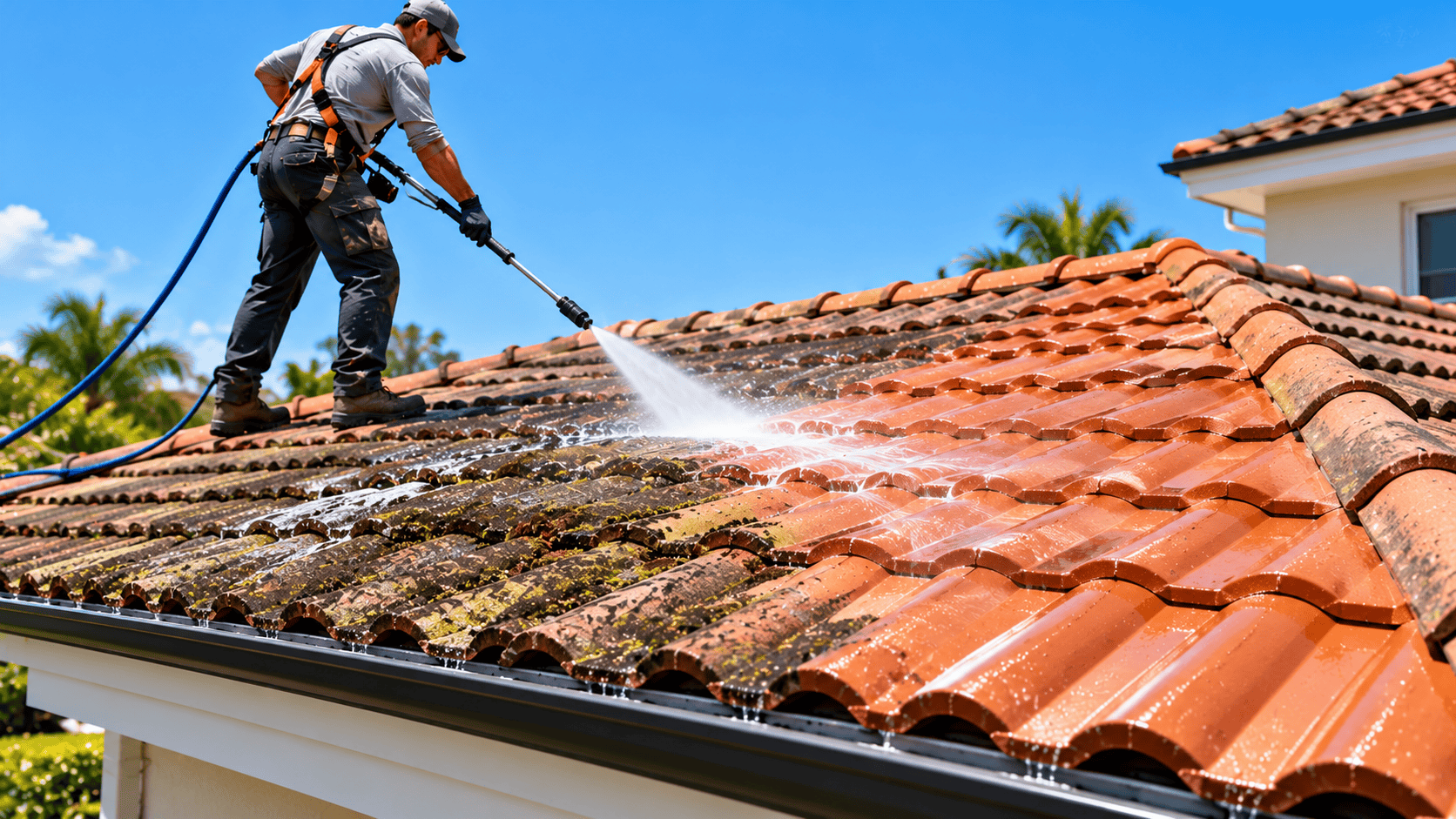
A clean roof does more than improve your home’s curb appeal. It helps protect roofing materials, prevents organic growth from spreading, and makes it easier to spot potential problems before they become expensive repairs. However, cleaning a roof incorrectly can damage shingles, loosen protective granules, cause leaks, or create serious safety hazards.
So, how do you clean a roof safely and effectively without causing damage? The key is to choose the right cleaning method, use suitable products, avoid excessive pressure, and follow essential safety precautions. Whether your roof has asphalt shingles, metal panels, or tile, understanding the proper cleaning process can help you maintain its appearance and extend its service life.
Inspect Your Roof and Choose the Right Cleaning Method
Before cleaning your roof, inspect its condition and identify the type of roofing material. Different materials require different cleaning techniques, and using the wrong method can lead to costly damage.
Look for black streaks, moss, algae, lichen, accumulated leaves, and other debris. Black streaks on asphalt shingles often indicate algae growth, while thick moss can trap moisture and gradually damage roofing materials. Also, check for cracked tiles, loose shingles, damaged flashing, or visible signs of leaks.
In case your roof is in a bad condition, then fix those problems before cleaning. Do not walk on roofing that is weak, steep or in poor condition.
Select a cleaning procedure that fits your roof:
Asphalt shingles: Cleaning should be done using a low-pressure cleaning procedure that is approved by the manufacturer and will not remove the protective granules.
Metal roofs: Choose a compatible cleaner and follow the manufacturer’s recommendations to protect the finish and prevent corrosion.
Tile roofs: Use gentle cleaning methods to avoid cracking tiles or damaging their surfaces.
When in doubt, consult your roofing manufacturer or a qualified roofing professional before proceeding.
Gather the Right Tools and Prioritize Safety
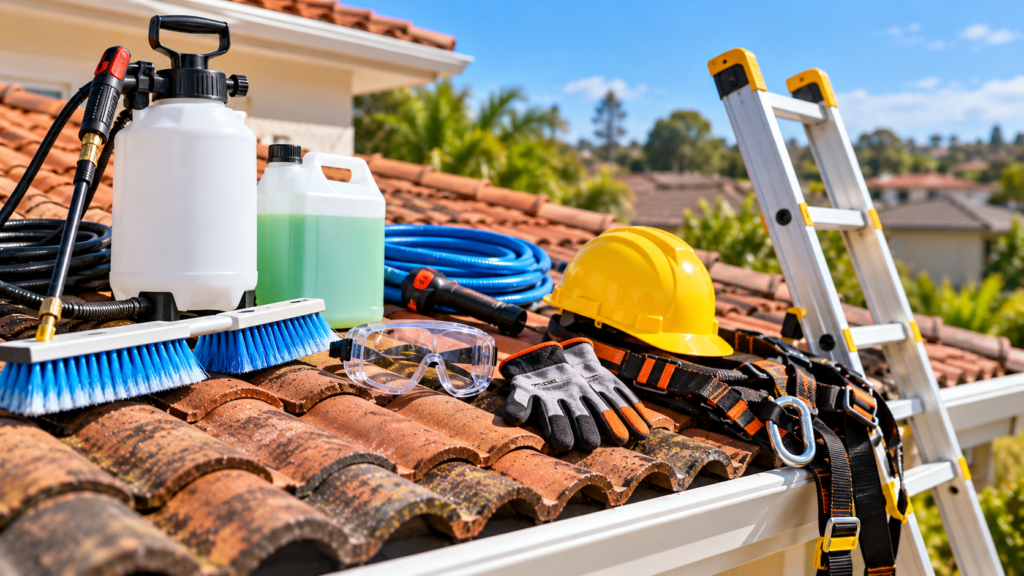
Having the right equipment makes roof cleaning easier, safer, and more effective. You do not need expensive machinery for every job, but you do need tools that suit your roof and cleaning method.
The correct equipment will simplify the process of cleaning the roof, make it safer and more efficient. You do not require costly equipment to perform all the tasks, but you require equipment that fits your roof and cleaning process.
Typical materials are a garden hose with a soft spray nozzle, a soft-bristle brush to work on the right surfaces, a manufacturer-approved roof cleaner, protective gloves, and safety glasses. You can also require a stable ladder, fall-protection equipment, and ground-level debris-removal tools.
Safety should always come first. Roof surfaces can become slippery when wet, especially when algae or moss is present. Never clean a roof during rain, strong winds, or other unfavorable weather conditions.
Follow these precautions:
- Keep the work area free of people and pets.
- Climb a well-secured ladder on flat and stable ground.
- When walking on roofing materials, it is advisable not to walk on them.
- Wear proper fall protection when on height.
- Do not work close to overhead power lines or on a roof which seems structurally unsound.
If your roof is steep, high, fragile, or difficult to access, hiring a professional roof cleaning service is the safer option. The cost of professional cleaning may be far less than the cost of an accident or roof repair.
Remove Loose Debris and Apply a Roof-Safe Cleaner
Start by removing loose leaves, twigs, pine needles, and other debris. Accumulated debris can block drainage, hold moisture against the roof, and encourage moss or algae growth.
Whenever possible, remove debris from the ground or a secure ladder position using suitable tools. Avoid dragging heavy equipment across shingles or using sharp tools that could scratch or puncture roofing materials.
Next, select a cleaning solution designed for your specific roof type. Follow the product label carefully, including its dilution instructions, application method, contact time, and rinsing requirements.
For algae and moss, a manufacturer-approved chemical treatment may be more effective and less damaging than aggressive scrubbing. Apply the cleaner gently and allow it to work as directed. Do not assume that stronger concentrations will produce better results.
Protect nearby plants, landscaping, outdoor furniture, and other surfaces from cleaning runoff. Direct runoff appropriately and follow the cleaner’s environmental precautions. Do not combine cleaning chemicals, especially those which have bleach and ammonia as they may produce harmful gases.
Avoid scraping moss aggressively from shingles or tiles. Heavy growth may require repeated treatment or professional removal. In some cases, dead moss will loosen and wash away naturally over time.
Clean Gently and Avoid High-Pressure Washing
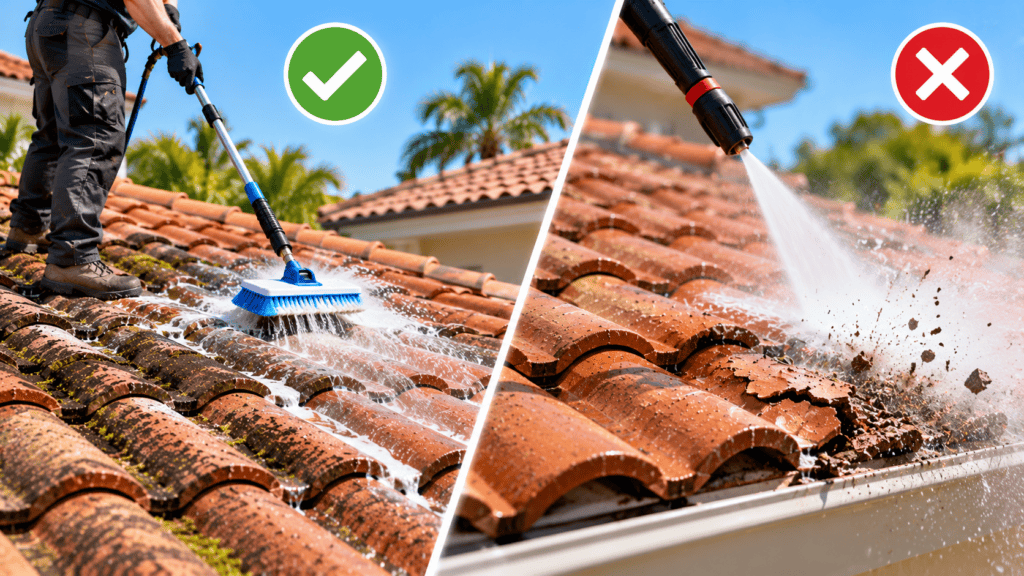
One of the most important rules of safe roof cleaning is to avoid excessive water pressure. Although pressure washers can remove dirt quickly, they may also strip granules from asphalt shingles, force water beneath roofing materials, damage tile surfaces, and compromise protective coatings.
In most residential roofs, high-pressure washing is not the best option compared to a mild, manufacturer-recommended cleaning technique.
Rinse should only be done as instructed by the product manufacturer after the relevant cleaner has been applied. Rinse with low pressure water where rinsing is necessary, and do not spray water up the roof or into roof vents, or in the area of vulnerable flashing and seams.
Use appropriate roofing materials, a soft-bristle brush may be used to get rid of loose dirt. Nevertheless, do not use harsh scrubbing, coarse pads, metal brushes and instruments that might scratch or loosen roofing elements.
It is important to remember that not all roofs are to be scrubbed or rinsed. There are cleaning treatments, which are left on the surface, and some cleaning treatments which need rinsing. Always use the instructions of your particular roof and cleaning product.
Clean up and inspect the roof after cleaning to ensure that there is no debris, damaged material, blocked gutters and water intrusion. When you see loose shingles, broken tiles or rotting flashing, get them fixed before it gets worse.
Prevent Future Roof Stains and Know When to Hire Professionals
Regular maintenance can reduce the need for frequent, intensive roof cleaning. Rather than waiting until thick moss or dark algae stains develop, take simple steps to keep your roof in good condition.
Prune hanging tree branches to enhance sunlight penetration and decrease the number of falling leaves. Keep gutters clean to allow rain to drain out. Inspect check roof valleys and drainage areas to remove debris, especially following storms.
Inspect your roof periodically from the ground for new stains, moss growth, missing shingles, or other visible changes. Addressing these issues early can help prevent moisture-related damage and extend the life of your roofing system.

