
Pressure washing can transform dirty surfaces, but using the wrong PSI (pounds per square inch) can cause expensive damage. Here’s what you need to know to clean safely and effectively.
Understanding PSI Ratings
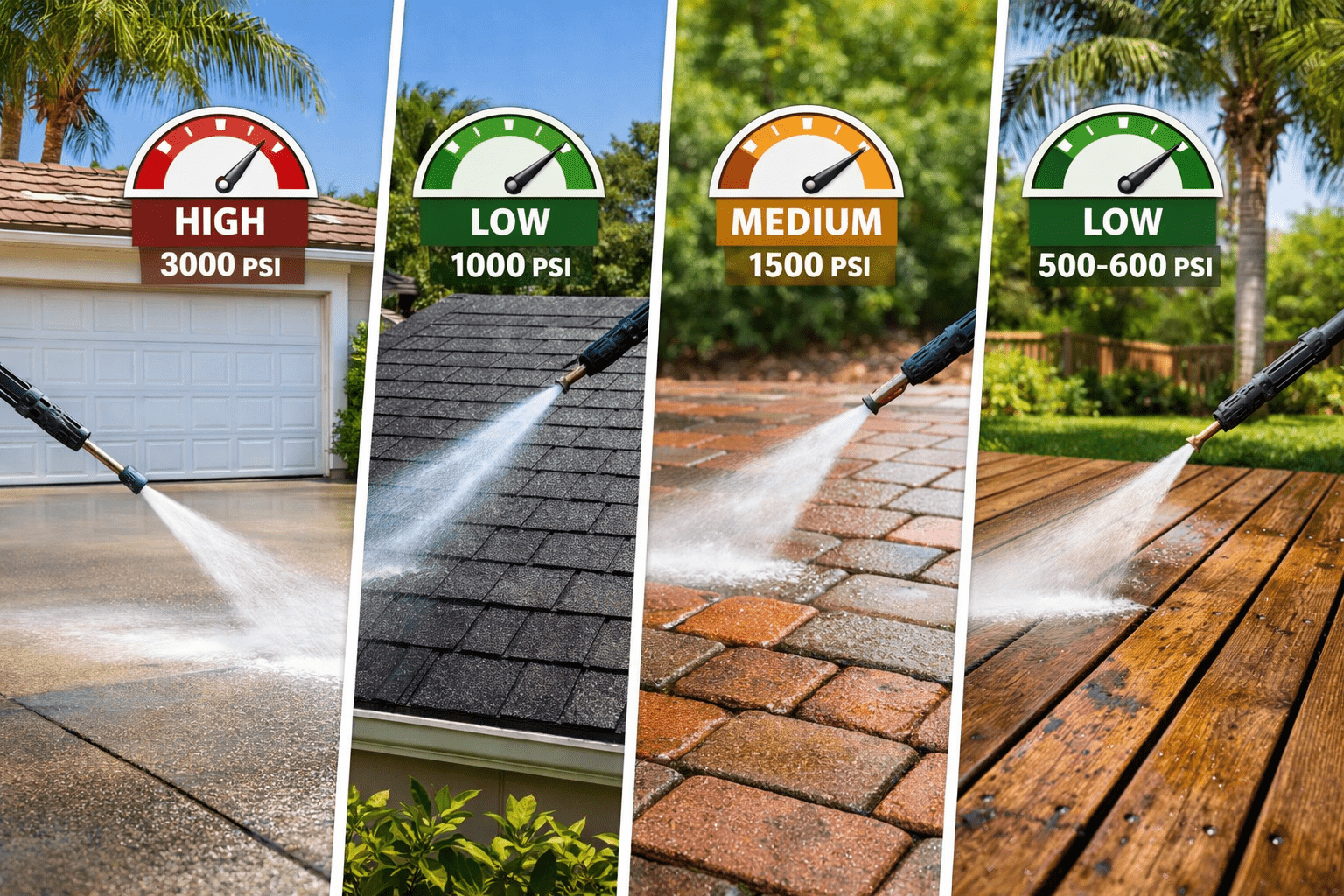
PSI measures the water pressure output of your washer. Most residential pressure washers range from 1,300 to 3,100 PSI, while commercial units can exceed 4,000 PSI. The key is matching the pressure to your surface’s durability.
Quick Rule: Softer surfaces need lower PSI; harder surfaces can handle more force.
Safe PSI Levels by Surface Type
| Surface | Recommended PSI | Nozzle Tip | Key Considerations |
|---|---|---|---|
| Concrete (Driveways, Sidewalks) | 3,000-4,000 PSI | 15-25° (yellow/green) | Can handle high pressure; use degreaser for oil stains |
| Asphalt Roofs | 500-600 PSI | 40-65° (white) | Very fragile; can strip protective granules |
| Tile Roofs | 1,200-1,500 PSI | 25-40° (green) | More durable but still require caution |
| Pavers (Brick/Stone) | 1,500-2,000 PSI | 25-40° (green) | Avoid dislodging sand between joints |
| Wood Decks | 500-1,200 PSI | 40-65° (white) | Can splinter easily; stay below 1,500 PSI |
| Vinyl Siding | 1,300-1,600 PSI | 25-40° (green) | Water can get behind panels at high pressure |
Concrete: The Heavy-Duty Surface
Concrete is the most forgiving surface for pressure washing. According to the Concrete Network, properly cured concrete can withstand pressures up to 4,000 PSI without damage.
Best practices:
- Use 3,000 PSI minimum for deep stains
- Keep the nozzle 6-12 inches from the surface
- Work in even, overlapping strokes to avoid streaking
- Pre-treat oil stains with degreaser for 10-15 minutes
New concrete (less than one year old) should be treated more gently at 2,000-2,500 PSI to avoid surface damage. For comprehensive guidance on how to pressure wash your house including concrete surfaces, proper technique makes all the difference.
Roofs: Where Caution Is Critical
Roof cleaning requires the lowest PSI of any exterior surface. The Asphalt Roofing Manufacturers Association warns that excessive pressure can remove protective granules, reducing your roof’s lifespan by years.
For asphalt shingles: Never exceed 600 PSI. Many professionals use soft washing (100-500 PSI) combined with specialized cleaning solutions instead. This chemical-based approach removes algae, moss, and stains without mechanical damage.
If you’re dealing with black roof stains, soft washing is particularly effective. Learn more about pressure washing different South Florida roofs to understand regional considerations.
Warning signs of damage: Missing granules, exposed asphalt, or lifted shingle edges all indicate too much pressure was used.
Pavers: Protecting the Joints
Pavers can handle moderate pressure, but there’s a catch, the sand or polymeric material between joints is vulnerable. Blasting at 3,000 PSI can displace this material, destabilizing your entire paver installation.
Pro tips:
- Start at 1,500 PSI and increase only if needed
- Maintain a 12-inch distance minimum
- Angle the spray away from joints
- Plan to re-sand joints after cleaning
A study by the Interlocking Concrete Pavement Institute found that proper cleaning extends paver life by preventing organic growth that can cause surface deterioration.
Wood: The Most Delicate Surface
Wood is highly susceptible to pressure damage. Using too much PSI can:
- Splinter and gouge the surface
- Force water deep into the grain, causing rot
- Remove protective stains and sealants
Recommended approach:
- Start at 500 PSI for softwoods (pine, cedar)
- Use up to 1,200 PSI for hardwoods (oak, mahogany)
- Hold the nozzle at a 45° angle
- Keep 12-18 inches away from the surface
- Test on an inconspicuous area first
Many deck restoration experts prefer 600-800 PSI with a cleaning solution rather than relying on high pressure alone.
Distance and Angle Matter
PSI isn’t the only factor—your technique affects results too:
- Too close: Doubles the effective pressure, increasing damage risk
- Too far: Reduces cleaning effectiveness
- Optimal distance: 6-12 inches for hard surfaces, 12-18 inches for soft surfaces
Holding the nozzle at a 45° angle (rather than perpendicular) reduces surface impact while maintaining cleaning power. Avoid common pressure washing mistakes that can damage your property.
When to Call a Professional
Consider hiring a professional if you’re dealing with:
- Any roof cleaning project
- Historic or delicate materials
- Multi-story buildings requiring ladders
- Stubborn stains that don’t respond to appropriate PSI
According to HomeAdvisor, the average cost of professional pressure washing is $200-$400 for most residential projects, far less than repairing damaged surfaces. Learn more about how much pressure cleaning costs to budget accordingly.
Understanding how pressure washing can help avoid expensive repairs makes professional service a smart investment. If you’re wondering should you pressure wash your house, professionals can assess your specific needs.
Final Thoughts
The right PSI protects your investment while delivering clean results. When in doubt, start low and increase gradually. It’s easier to make a second pass at higher pressure than to repair gouged wood or replace damaged shingles.
Remember: more pressure doesn’t always mean better cleaning. Smart pressure washing combines appropriate PSI, proper technique, and the right cleaning solutions for professional results without the risk. For Miami homeowners, understanding the top 10 benefits of routine pressure washing helps you maintain your property’s value and appearance year-round.