Quick Summary:
This article identifies 10 critical warning signs that indicate your outdoor surfaces need professional pressure washing before permanent damage occurs. Key indicators include surfaces staying damp for extended periods after rain, recurring dark streaks from algae or mildew, slippery walkways that create safety hazards, and premature fading or aging of materials.
Main takeaways:
- Safety risks: Slippery biofilm on walkways causes slip-and-fall accidents
- Financial impact: Delayed cleaning leads to $10,000-$40,000 in repair costs vs. $3,000-$6,000 for preventive maintenance over 10 years
- Damage prevention: Regular pressure washing removes moisture-trapping dirt that accelerates material deterioration by 20-40%
- Professional advantage: Proper technique requires specific PSI levels (500-3,500 depending on surface) to avoid damage while ensuring thorough cleaning
Action items: Annual pressure washing prevents mold growth, extends surface lifespan, eliminates safety hazards, and protects property value. Properties in humid or shaded areas may need semi-annual cleaning to prevent biological growth from taking hold.
Introduction
Outdoor surfaces deal with a lot every day. Rain, heat, dust, pollution, fallen leaves, and constant foot traffic all leave their mark. Over time, this buildup does more than affect how your home looks. It can create safety risks, shorten the life of surfaces, and encourage mold and algae growth.
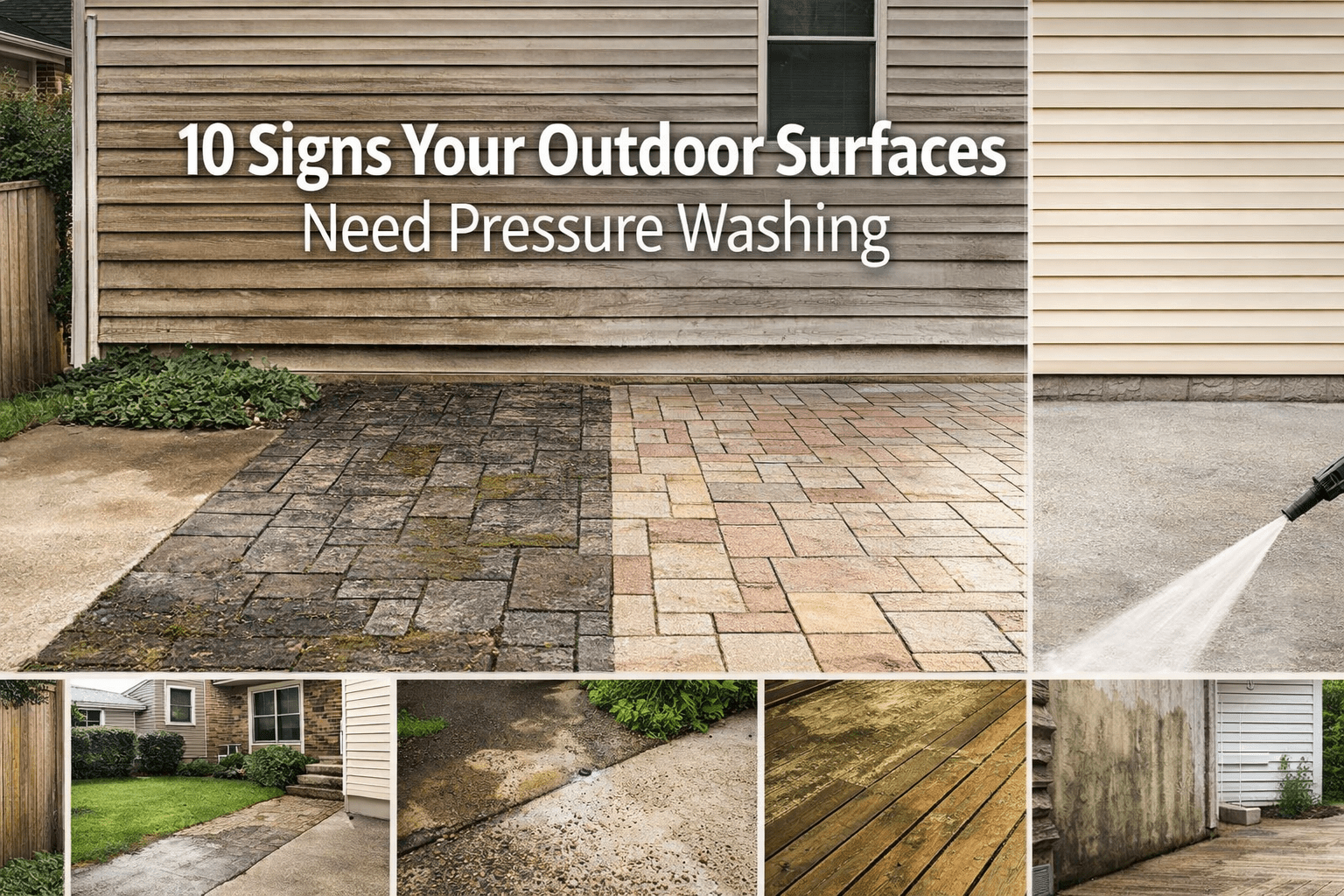
The challenge is that many of the warning signs appear slowly. By the time surfaces look obviously dirty, the damage has already started. Knowing what to watch for helps you act early and protect your home before problems grow. Below are ten clear signs your outdoor surfaces need pressure washing.
10 Critical Signs Your Property Needs Pressure Washing
| Warning Sign | Underlying Problem | Risk Level |
|---|---|---|
| Surfaces stay damp for hours | Dirt trapping moisture | High – Promotes mold |
| Dark streaks reappear after rain | Algae/mildew bonded to surface | Medium – Spreads over time |
| Slippery walkways when wet | Organic buildup layer | High – Safety hazard |
| Faded, dull appearance | Accelerated surface wear | Medium – Material degradation |
| Green growth in shaded areas | Moisture retention zones | High – Rapid spread potential |
| Stains resist water rinsing | Bonded grime in pores | Medium – Deep cleaning needed |
| Patchy discoloration | Uneven algae/mildew spread | Medium – Expansion in progress |
| Pre-painting/sealing prep | Poor coating adhesion | High – Project failure risk |
| Increased insect activity | Organic residue attraction | Low – Pest encouragement |
| Neglected exterior appearance | Overall buildup accumulation | Low – Curb appeal impact |
1. Your Surfaces Stay Damp Long After Rain
What it means: Clean concrete, pavers, and siding dry within 1-3 hours of rainfall. When surfaces stay damp for 6+ hours or remain wet overnight, accumulated dirt and organic material are trapping moisture against the surface.
Why it matters: Prolonged dampness creates ideal conditions for mold, mildew, and algae colonization. This constant moisture also penetrates surface pores, weakening materials through freeze-thaw cycles (in cold climates) or continuous saturation (in humid regions).
Action needed: Pressure cleaning removes the moisture-retaining layer, allowing surfaces to dry naturally and resist biological growth.
2. Dark Streaks Keep Reappearing
What it means: Dark vertical streaks on siding or irregular patterns on horizontal surfaces indicate algae (Gloeocapsa magma) or mildew that has bonded to the material. These organisms produce dark pigmentation that stains surfaces even after the organisms die.
Why it matters: Surface-level dirt washes away with rain, but recurring streaks indicate growth that has penetrated surface texture. This biological activity continues degrading the material, creating progressively deeper staining that becomes difficult or impossible to remove without professional intervention.
Action needed: Pressure washing with appropriate cleaning solutions kills organisms and removes embedded staining before permanent discoloration occurs.
3. Walkways Feel Slippery When Wet
What it means: A slick, slippery texture on wet concrete, pavers, or composite decking indicates algae or biofilm coating. This organic layer becomes extremely slippery when moisture is present.
Why it matters: Slip and fall accidents represent serious liability and injury risks, particularly for children, elderly individuals, and anyone navigating steps or slopes. The CDC reports that falls cause over 800,000 hospitalizations annually, with many occurring on slippery outdoor surfaces.
Action needed: Immediate pressure washing removes the hazardous biofilm layer and restores safe traction to walking surfaces.
4. Outdoor Areas Look Older Than They Should
What it means: When concrete appears chalky, pavers look washed out, or siding seems dull despite being relatively new, accumulated grime is accelerating UV damage and surface oxidation.
Why it matters: Dirt acts as an abrasive that traps heat and moisture while grinding against surfaces during wind and rain. This accelerates the natural aging process, reducing material lifespan by 20-40% compared to regularly maintained surfaces.
Action needed: Pressure washing removes abrasive buildup and reveals the original surface condition, slowing premature aging.
5. Green Growth Appears in Shaded Areas
What it means: Moss, algae, and mold thrive in shaded zones where sunlight exposure is limited and moisture evaporates slowly. North-facing walls, areas under eaves, and spaces near trees become biological growth hotspots.
Why it matters: These isolated colonies expand outward over time, eventually covering entire surfaces. Moss roots penetrate surface materials, creating cracks and gaps. Algae spread through airborne spores that colonize adjacent areas.
Action needed: Early pressure washing eliminates growth colonies before they establish extensive root systems or spread to larger surface areas.
6. Stains Do Not Rinse AwayWithWater
What it means: Stains that remain visible after water exposure indicate bonded contamination—substances chemically adhered to the surface or biological growth embedded in surface texture.
Why it matters: Bonded stains indicate surface pores are clogged with organic matter, oils, minerals, or biological material. This prevents proper drainage, accelerates deterioration, and creates a substrate for additional contamination.
Action needed: High-pressure cleaning or soft washing with appropriate chemicals breaks the bond between contaminants and surfaces, restoring porosity and appearance.
7. Roof or Hardscape Looks Patchy
What it means: Uneven coloring, light patches next to dark areas, indicates biological growth spreading across the surface in response to moisture patterns, shade zones, or drainage issues.
Why it matters: Patchy growth demonstrates active colonization. Left untreated, these areas merge into complete coverage within 6-18 months. On roofs, algae growth can reduce shingle lifespan by up to 10 years by degrading protective granules.
Action needed: Roof cleaning during the patchy stage prevents complete surface colonization and protects material integrity.
8. You Are Preparing to Paint or Seal
What it means: Any coating application requires a clean, dry, contaminant-free surface for proper adhesion. Even invisible dirt and oils prevent mechanical bonding.
Why it matters: Paint or sealant applied over contaminated surfaces fails prematurely through peeling, bubbling, or delamination. Industry standards require pressure washing as essential surface preparation for any coating project.
Action needed: Professional pressure washing 24-48 hours before coating application ensures maximum adhesion and coating longevity.
9. Insects Gather Around Outdoor Surfaces
What it means: Ants, flies, spiders, and other insects feed on algae, mold spores, and organic debris. Dirty surfaces provide food sources that attract insects close to your home’s entry points.
Why it matters: Insect activity near foundations, doorways, and windows increases the likelihood of indoor pest problems. Some insects also accelerate surface deterioration through nesting behaviors.
Action needed: Pressure washing removes the organic matter that attracts pests, creating a less hospitable environment around your home’s perimeter.
10. Your Home Feels Clean InsideButTired Outside
What it means: When your home’s interior is clean and well-maintained but the exterior shows visible grime, streaking, or discoloration, the imbalance affects overall property presentation and value.
Why it matters: Curb appeal significantly impacts property value, studies show well-maintained exteriors increase home values by 5-10%. For selling properties, exterior cleanliness influences buyer perception and offer amounts.
Action needed: Regular pressure washing maintains aesthetic balance and protects property investment.
Common repair costs from neglected cleaning:
- Concrete resurfacing: $3-$10 per square foot
- Siding replacement: $5,000-$15,000
- Roof shingle replacement: $5,000-$12,000
- Deck restoration/replacement: $4,000-$20,000
- Paint removal and repainting: $3,000-$8,000
Regular pressure washing prevents these expenses while maintaining property value and appearance.
Professional Pressure Washing Versus DIY Cleaning
While some homeowners attempt to clean surfaces themselves, pressure washing requires experience and proper technique. Too much pressure can damage surfaces, while too little leaves buildup behind.
Different materials require different approaches. Professionals know how to clean safely and effectively without causing harm. This ensures better results and longer lasting protection.
This is where Kleanway Cleaning Services stands out. Our experience allows us to assess each surface and apply the right method for thorough cleaning without damage.
Conclusion: Clean Surfaces Are Easier to Maintain Than Damaged Ones
Outdoor surfaces show warning signs long before serious damage occurs. Damp areas, recurring stains, slippery walkways, and uneven coloring all point to the need for pressure washing.
Addressing these signs early protects your surfaces, improves safety, and keeps your home looking its best. Pressure washing is not just about appearance. It is preventive care for your property.
If your outdoor areas are showing any of these signs, now is the time to act. Kleanway Cleaning Services can help restore your surfaces and protect them from long term damage. Contact us today to schedule a professional pressure washing service and keep your home clean, safe, and well maintained.
Frequently Asked Questions
- How do I know if my outdoor surfaces really need pressure washing?
If surfaces stay damp for long periods, feel slippery when wet, or show dark or green stains that do not wash away, pressure washing is likely needed. These signs indicate buildup that normal rinsing cannot remove.
- Is pressure washing only for cosmetic purposes?
No. Pressure washing helps remove moisture trapping dirt, algae, and mildew. This reduces safety risks, prevents surface damage, and helps materials last longer.
- Which outdoor surfaces benefit most from pressure washing?
Common surfaces include driveways, walkways, patios, decks, siding, fences, and roofs. Any surface exposed to moisture and organic debris can benefit from regular cleaning.
- How often should outdoor surfaces be pressure washed?
Most homes benefit from pressure washing once a year. Homes in humid or shaded environments may need more frequent cleaning to prevent buildup.
- Can pressure washing prevent mold and mildew growth?
Yes. Pressure washing removes the organic matter that mold and mildew feed on. Clean surfaces dry faster and are less likely to support future growth.
- Is pressure washing safe for all materials?
Different surfaces require different techniques. Concrete, wood, siding, and roofing materials all need specific pressure levels or soft washing methods to avoid damage.
- Can I pressure wash my home myself?
While some homeowners attempt it, improper pressure or technique can damage surfaces. Professional cleaning ensures the right method is used for each material.
- Why do stains return quickly after basic cleaning?
Quick rinsing removes surface dirt but not embedded grime or biological growth. Pressure washing reaches deeper layers to prevent stains from returning too soon.
- Does pressurewashinghelp with slippery walkways?
Yes. Removing algae and buildup improves traction and reduces the risk of slips and falls, especially after rain or morning dew.
- When is the best time to schedule pressure washing?
Pressure washing is ideal before painting or sealing, after long periods of humidity, or when early signs of buildup appear. Acting early prevents larger issues later.