

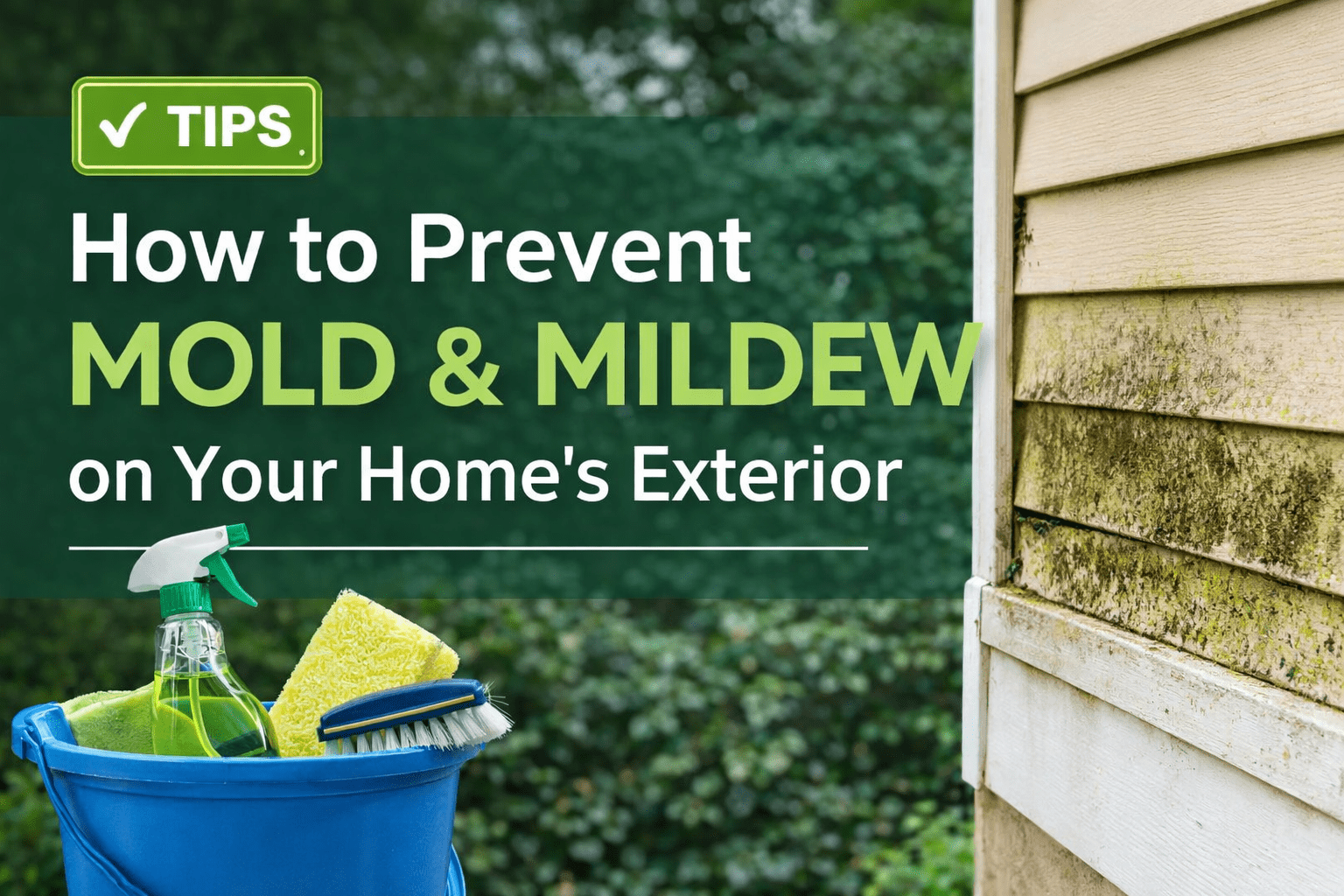
How to Prevent Mold & Mildew on Your Home’s Exterior
Mold and mildew rarely start inside your home. In most cases, the problem begins quietly outside, long before you notice stains on walls or musty smells indoors. Your home’s exterior is constantly exposed to moisture, dirt, heat, and organic debris. When these elements come together, they create the perfect environment for mold and mildew growth.
Preventing this buildup is not about one time fixes. It is about understanding how moisture behaves on exterior surfaces and taking simple steps to keep your home clean, dry, and protected. Let’s walk through how mold and mildew form outside and what you can do to stop them before they become a bigger issue.
A Quick Summary:
|
Topic |
What to Know Quickly |
| Why mold forms outside | Mold grows when moisture stays trapped on dirty exterior surfaces |
| Most affected areas | Siding, roofs, driveways, walkways, trim, and shaded walls |
| Hidden risk factor | Dirty surfaces dry slower after rain and humidity |
| Role of pressure cleaning | Removes moisture trapping buildup that feeds mold growth |
| Best prevention approach | Regular exterior cleaning plus good airflow |
| Landscaping impact | Plants and sprinklers can keep walls damp |
| Health connection | Exterior mold can release spores into the air |
Mold Does Not Need an Invitation. It Just Needs Moisture
The most important thing to understand about mold and mildew is that they thrive where moisture lingers. Rain alone is not the problem. The real issue is what happens after the rain stops.
When dirt, algae, pollen, and grime collect on surfaces like siding, driveways, or roofs, they trap water. These damp layers prevent surfaces from drying properly. Over time, that trapped moisture feeds mold spores that are already present in the air. According to the Centers for Disease Control and Prevention (CDC), mold spores are naturally present everywhere and only need moisture and organic material to begin growing.
This is why homes in warm and humid regions often struggle more with exterior mold. The combination of heat, humidity, and slow drying surfaces creates ideal conditions for growth. Miami’s tropical climate makes regular exterior maintenance especially important for preventing mold buildup.
The Exterior Surfaces Mold Attacks First
Many homeowners assume mold only appears on walls or roofs. In reality, it often starts in places that are easy to overlook.
- Driveways and walkways are common trouble spots. They collect dirt and organic matter and stay damp longer than expected, especially in shaded areas. If you notice signs your driveway needs professional cleaning, mold prevention should be a priority.
- Siding, particularly textured finishes, can hold moisture in tiny grooves. Understanding why soft washing works better for delicate siding materials can help protect your home’s exterior.
- Roof tiles and shingles trap leaves and debris that retain water. Regular roof cleaning in Miami prevents organic buildup that feeds mold growth.
- Trim, fascia, and soffits are also vulnerable because they sit where moisture and airflow meet.
When these surfaces stay dirty, they stay wet. And when they stay wet, mold and mildew have time to grow.
Why Drying Time Matters More Than Rainfall
Rain is unavoidable. What matters is how quickly your home dries afterward.
Clean surfaces shed water faster than dirty ones. A layer of grime acts like a sponge, soaking up moisture and slowing evaporation. This means two homes in the same neighborhood can experience very different mold risks depending on how well their exteriors are maintained.
Shaded walls, north facing sides of the house, and areas blocked by plants or fences tend to dry the slowest. These zones are often where mold appears first. Improving drying time is one of the most effective ways to prevent mold buildup.
Pressure Cleaning as a Preventive Tool
Many people think of pressure cleaning as purely cosmetic. In reality, it plays a critical role in mold prevention.
Professional exterior cleaning removes the organic material that mold feeds on. Dirt, algae, and mildew stains are not just ugly. They hold moisture against surfaces. By removing this buildup, pressure cleaning allows surfaces to dry faster after rain or humidity.
Different materials require different approaches. High pressure is not suitable for every surface. Soft washing methods are often used on siding and roofs to safely remove growth without causing damage. This is why professional cleaning is more effective than quick do it yourself solutions that may only clean the surface visually. Understanding common pressure washing mistakes helps you avoid damage and achieve better results.
Regular exterior cleaning breaks the mold growth cycle before it becomes established.
Think of Exterior Cleaning as an Annual Reset
One of the most useful ways to think about mold prevention is to treat exterior cleaning as a reset, not a repair.
Waiting until green or black stains appear means mold has already had time to settle in. Preventive cleaning removes early buildup before it becomes visible or harmful. An annual or seasonal cleaning schedule helps keep moisture from lingering and reduces long term damage to surfaces. Learn how often you should clean different exterior surfaces to maintain proper protection.
This approach protects not only appearance but also materials. Regular pressure cleaning extends the life of exterior surfaces and prevents costly repairs caused by prolonged moisture exposure.
Landscaping Choices That Increase Mold Risk
Your yard and landscaping can unknowingly encourage mold and mildew growth.
Plants that sit too close to siding block airflow and shade surfaces. Overgrown hedges prevent walls from drying. Soil or mulch piled too high against exterior walls keeps moisture trapped at the base of the home. Sprinklers that spray directly onto siding add unnecessary moisture day after day.
Simple adjustments can make a big difference. Leaving space between plants and walls, trimming back growth, and adjusting sprinkler direction all help reduce moisture buildup.
Exterior Mold Can Still Affect Indoor Health
Even when mold is growing outside, it can still impact your indoor environment.
Mold spores travel through the air and can enter through doors, windows, and ventilation openings. Over time, exterior mold growth increases the number of spores around your home. The Environmental Protection Agency (EPA) warns that exposure to mold can cause health effects including respiratory issues, allergic reactions, and asthma attacks in sensitive individuals.
For people with allergies, asthma, or sensitivities, this can contribute to discomfort even if no visible mold is inside. Research from the National Institute of Environmental Health Sciences indicates that mold exposure can trigger symptoms in people with compromised immune systems or chronic lung conditions.
Early Warning Signs to Watch For
Catching mold early makes prevention easier. Look for these signs your outdoor surfaces need pressure washing:
- Green or black streaks on siding, driveways, or roofs
- Surfaces that feel slippery when wet
- Areas that never seem to dry completely
- Stains that return quickly after rain
These signals suggest it is time to take action before mold spreads further. If you’re in Miami’s wet season, understanding pressure washing considerations during rainy months can help you time your cleaning effectively.
When Professional Help Makes Sense
While basic maintenance helps, professional cleaning offers deeper protection.
Experts understand how different materials respond to cleaning methods. They know how to remove buildup safely without damaging surfaces or spreading spores. Professional equipment reaches areas that household tools cannot, ensuring a more thorough result. Discover why professional help is essential when dealing with mold prevention.
This is where Kleanway Cleaning Services adds real value. Their experience with exterior surfaces allows homeowners to address mold risks before they become expensive problems. A professional approach saves time, protects materials, and delivers longer lasting results. Learn more about how to prepare your home for professional exterior cleaning to maximize effectiveness.
A Clean Exterior Is Your First Line of Defense
Preventing mold and mildew on your home’s exterior is about more than appearances. It is about controlling moisture, improving drying time, and maintaining surfaces so mold has no place to grow.
Regular exterior cleaning, smart landscaping choices, and early attention to problem areas all work together to protect your home. When prevention becomes part of routine care, mold becomes much easier to manage. Understanding the overlooked consequences of neglecting routine pressure cleaning highlights why consistent maintenance matters.
If you want to keep your home cleaner, healthier, and protected year round, professional exterior cleaning is a smart step. Kleanway Cleaning Services can help restore your surfaces and reduce the conditions that allow mold to thrive. Reach out today to schedule a professional assessment and take a step toward a mold resistant home.
Frequently Asked Questions
- What causes mold and mildew to grow on ahome’sexterior?
Mold and mildew grow when moisture stays on exterior surfaces for too long. Dirt, algae, and organic debris trap water, especially in shaded or humid areas. When surfaces do not dry properly, mold spores can settle and grow.
- Is mold on the outside of a house really a problem?
Yes. Exterior mold can damage surfaces over time and release spores into the air. These spores can enter the home through doors, windows, or vents and may affect indoor air quality.
- What is the difference between mold and mildew?
Mildew usually appears as light colored or powdery patches and spreads on the surface. Mold tends to be darker and can grow deeper into materials if moisture remains. Both thrive in damp conditions and should be addressed early.
- Which exterior areas are most likely to develop mold?
Common problem areas include siding, roofs, driveways, walkways, patios, trim, and areas with poor airflow. Shaded walls and surfaces near plants or sprinklers are especially vulnerable.
- Can regular rain cause mold on exterior surfaces?
Rain alone does not cause mold. Mold develops when moisture lingers after rainfall. Dirty surfaces take longer to dry, which increases the risk of mold and mildew growth.
- How does pressure cleaning help prevent mold and mildew?
Pressure cleaning removes dirt, algae, and organic buildup that hold moisture. Once these layers are gone, surfaces dry faster and become less hospitable to mold growth. Learn about the benefits of routine pressure washing for your home.
- How often should exterior surfaces be cleaned to prevent mold?
Most homes benefit from professional exterior cleaning once a year. In humid or coastal climates, more frequent cleaning may be helpful to reduce moisture retention.
- Can landscaping contribute to exterior mold problems?
Yes. Plants too close to walls, overgrown hedges, and sprinkler overspray can keep surfaces damp. Improving airflow and reducing constant moisture exposure can significantly lower mold risk.
- Is it safe to remove exterior mold on your own?
Small areas can sometimes be cleaned, but improper methods may spread spores or damage surfaces. Professional cleaning ensures the right technique is used for each material and provides longer lasting results. Review DIY pressure washing safety tips if attempting your own cleaning.
- When should I consider professional pressure cleaning?
If mold stains keep returning, surfaces stay damp, or large areas are affected, professional pressure cleaning is the best option. It addresses both visible buildup and the conditions that allow mold to grow.