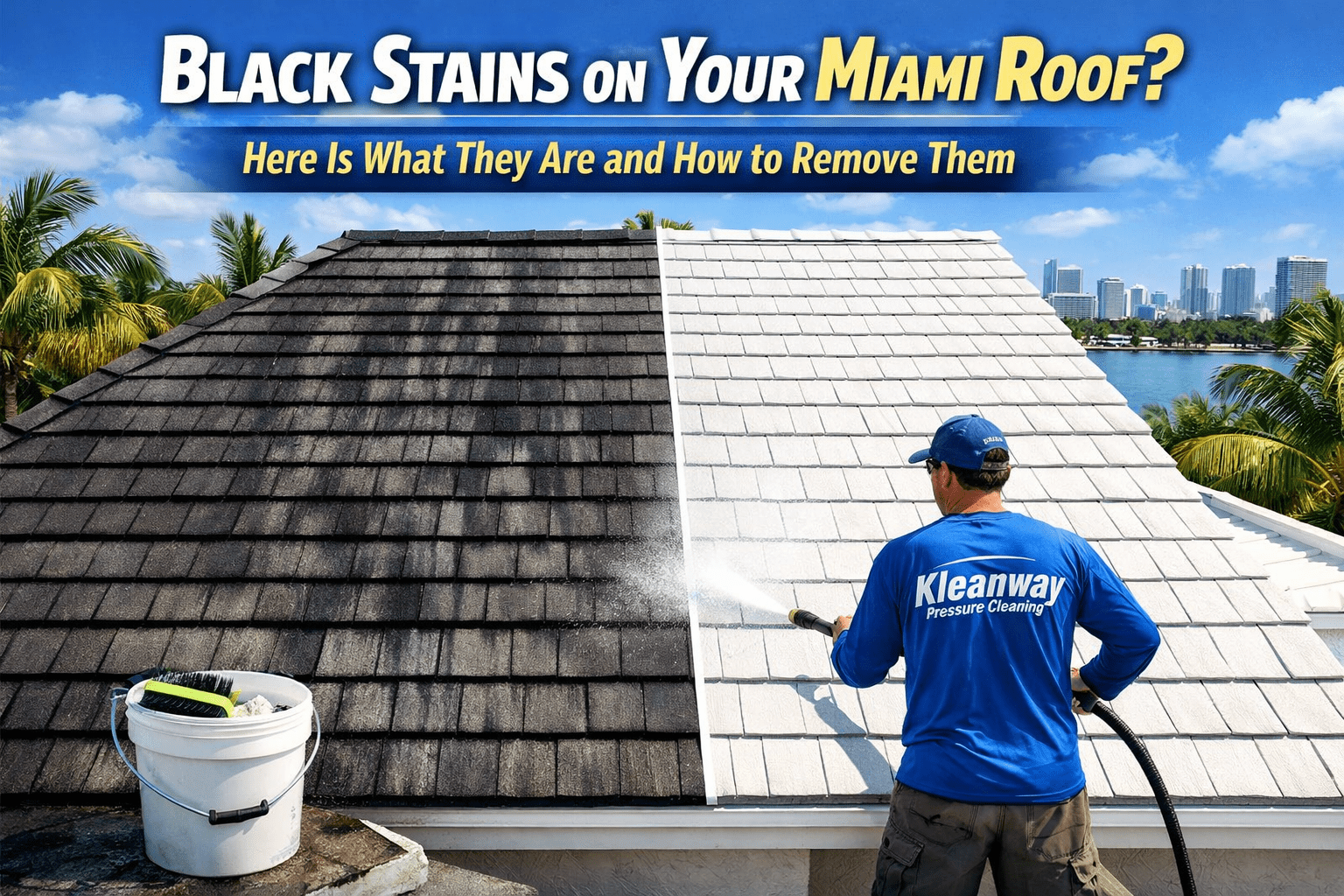
Black streaks on your roof are not just dirt.
In Miami, they are almost always caused by Gloeocapsa magma, a type of algae that thrives in humid climates. While the stains may look harmless at first, they can trap moisture against your roofing materials and slowly shorten your roof’s lifespan if left untreated.
If your roof is more than a few years old, you are not alone. In South Florida’s climate, black streaks commonly appear within three to five years after installation. Let us break down what they are, why they show up so quickly in Miami, and what you can safely do about them.
What Causes Black Streaks on My Roof?
The name sounds complicated, but the explanation is simple.
Gloeocapsa magma pronounced glee oh CAP suh MAG muh is a type of cyanobacteria. It spreads through airborne spores and feeds on the limestone filler used in many asphalt shingles.
At first, it appears as small dark spots. Over time, those spots stretch into streaks that run down your roof. The dark color comes from a protective pigment the algae produces to shield itself from sunlight. That is why the stains often look black or very dark brown.
You will usually notice it first on the north facing side of your roof or on areas that stay shaded longer. Moisture lingers there, and algae love moisture.
Why Are Black Roof Stains So Common in Miami?
Miami creates the perfect environment for algae growth.
Humidity levels often sit between 70 and 90 percent. Temperatures stay warm almost all year. Rain showers are frequent, especially during the summer months. Add salt air in coastal neighborhoods like Miami Beach and Coconut Grove, and you have ideal conditions for organic growth.
In areas like Brickell and Coral Gables where trees provide shade, moisture can linger even longer. That speeds up the process.
In dry climates, roofs may stay clean for many years. In South Florida, the timeline is much shorter. It is simply part of living in a tropical environment.
Are Black Roof Stains Dangerous?
They are not dangerous in the sense of immediate structural failure. But over time, they can cause problems.
Algae hold moisture against your shingles. Moisture weakens roofing granules. Those granules are important because they protect the underlying material from sun exposure and weather damage.
As algae spread, they also reduce the roof’s reflectivity. That means your roof absorbs more heat. In a hot climate like Miami, this can increase attic temperatures and place more strain on your cooling system.
Major roofing manufacturers such as GAF, CertainTeed, and Owens Corning all address algae growth in their product guides and offer algae resistant shingle options for this reason. The issue is common enough that the industry has built products around it.
The longer stains remain untreated, the greater the chance of premature aging.
Algae vs Moss vs Mold vs Dirt
Not every dark patch is the same. Here is how to tell the difference.
Algae
Appearance: Black streaks running downward
Texture: Flat stain
Common in Miami: Very common
Damage level: Moderate over time
Moss
Appearance: Green clumps or thick patches
Texture: Raised and spongy
Common in Miami: Less common but possible in shaded areas
Damage level: Can lift shingles
Mold
Appearance: Dark irregular patches
Texture: Slightly fuzzy
Common in Miami: Possible
Damage level: Surface issue
Dirt
Appearance: Brown or gray film
Texture: Even layer
Common in Miami: Common
Damage level: Mostly cosmetic
Most of the time in Miami, those long dark streaks are algae.
How Do I Remove Black Algae from My Roof?
This is where many homeowners pause. They want a quick fix. That is understandable.
Can I Use Bleach?
Bleach based mixtures are commonly suggested online. They can lighten the stains temporarily. But they also come with risks.
Bleach runoff can damage landscaping. Strong concentrations may weaken shingles if applied incorrectly. And without proper dilution and dwell time control, it may not kill the algae completely.
Is Pressure Washing Safe?
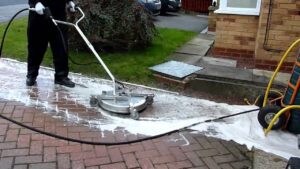
High pressure washing is not recommended for most residential roofs. Strong water pressure can strip protective granules from shingles. That shortens roof life and may void warranties.
It can look clean immediately. But the long term damage is not worth it.
Why DIY Methods Often Do Not Last
Many DIY solutions only treat the surface. They do not fully eliminate the root growth. That means stains can return within months, especially in Miami’s humid climate.
What Is the Professional Roof Cleaning Process?
Professional roof cleaning focuses on safety and longevity.
The Soft Wash Method
Soft washing uses low pressure combined with specialized cleaning solutions designed to eliminate algae at the root.
The process typically includes:
- Controlled application of cleaning solution
- Proper dwell time to break down organic growth
- Gentle rinse without damaging shingles
- Protection of landscaping and surrounding areas
This method cleans effectively while preserving roofing materials.
How Long Do Results Last?
In Miami’s climate, professional soft washing typically keeps roofs clean for two to three years. The exact timeline depends on tree coverage, shade, and moisture exposure.
Regular maintenance extends those results even further.
How Much Does Professional Roof Cleaning Cost in Miami?
For most residential homes, professional roof cleaning typically ranges between $350 and $650. Final pricing depends on roof size, pitch, material, and severity of staining.
DIY cleaning supplies may cost between $50 and $100. But that does not include equipment, safety gear, or the potential cost of mistakes.
When comparing options, consider more than the upfront price. Think about risk, safety, and long term roof health.
How Can I Prevent Black Stains from Coming Back?
While algae are common in Miami, there are ways to slow their return.
- Install zinc or copper strips near the roof ridge
- Trim overhanging branches to increase sunlight exposure
- Improve attic ventilation to reduce trapped moisture
- Keep gutters clean
- Schedule periodic professional maintenance
Zinc and copper release small particles during rain that naturally inhibit algae growth. It is a simple but effective preventative measure.
When Should You Call a Professional?
There are certain situations where professional help is strongly recommended.
- Steep roof pitch
- Tile or slate roofing materials
- Extensive black coverage
- Concerns about manufacturer warranty
- Safety risks from climbing in humid conditions
Roofs in Miami can be slippery. Heat and humidity make it even more dangerous. Safety should always come first.
Final Thoughts
Black streaks on your roof are extremely common in Miami. They are not a sign that your roof is failing. But they are a sign that algae have taken hold.
Left untreated, those stains can shorten your roof’s lifespan and reduce its energy efficiency. The good news is they are manageable. And with the right approach, they are completely treatable.
If you are seeing black streaks and want a safe, long lasting solution, contact Kleanway Pressure Cleaning for a professional roof inspection and estimate. Their team understands Miami’s climate and uses proven soft wash methods designed to protect your roof while restoring its clean appearance.
Frequently Asked Questions
-
Can I use bleach on my roof?
Bleach can lighten black roof stains temporarily, but it must be used carefully. Strong mixtures can damage shingles and harm nearby plants. Without proper dilution and technique, bleach may not fully eliminate the algae, which means stains can return quickly.
-
Will pressure washing damage shingles?
Yes, high pressure washing can damage asphalt shingles. It may strip away protective granules and shorten the roof’s lifespan. Most roofing manufacturers recommend low pressure soft washing instead of traditional pressure washing.
-
How much does roof algae removal cost in Miami?
Professional roof algae removal in Miami typically ranges between $350 and $650 for an average residential roof. The final cost depends on roof size, pitch, material, and the severity of staining.
-
What causes black streaks on roofs in Miami?
Black streaks are usually caused by Gloeocapsa magma, a type of algae that thrives in warm and humid climates. Miami’s high humidity and frequent rain create ideal conditions for this growth.
-
Are black roof stains harmful to my roof?
Over time, yes. Algae hold moisture against shingles, which can weaken roofing materials and reduce reflectivity. This may contribute to faster aging if left untreated.
-
How long does professional roof cleaning last?
In Miami’s climate, professional soft washing typically keeps roofs clean for two to three years. Shaded areas or heavy tree coverage may require more frequent maintenance.
-
Is roof algae the same as mold or moss?
No. Roof algae appear as flat black streaks. Moss is thicker and green, often growing in clumps. Mold can appear as dark irregular patches. Each requires a different treatment approach.
-
Can roof cleaning void my warranty?
Improper cleaning methods, especially high pressure washing, may void certain manufacturer warranties. It is important to follow recommended cleaning methods, typically low pressure soft washing.
-
Is DIY roof algae removal safe?
Climbing onto a roof can be dangerous, especially in Miami’s humid conditions. DIY methods also carry the risk of surface damage if chemicals or pressure are used incorrectly.
-
How can I prevent black algae from coming back?
You can slow regrowth by trimming overhanging branches, improving attic ventilation, installing zinc or copper strips, and scheduling periodic professional maintenance.