
Concrete driveways take a beating.
Oil drips. Tire marks. Dirt. Rain. Sun. It all builds up over time. Before you know it, your driveway looks dull and stained.
The good news is that concrete responds very well to pressure washing. The key is doing it correctly. Too little pressure will not clean it. Too much pressure can damage it.
Here is a simple, step by step guide that walks you from beginner basics to more advanced techniques.
Quick Summary: Concrete Driveway Pressure Washing Guide
Essential Equipment & Settings:
- Pressure washer: 3,000-4,000 PSI recommended for concrete
- Best nozzle: 25° for general cleaning, 15° for stubborn stains
- Distance: Hold wand 6-12 inches from surface at 45° angle
- NEVER use: 0° nozzle (causes permanent pitting and etching damage)
- Pre-treatment: Concrete degreaser for oil stains, rust remover for rust
Step-by-Step Process:
- Prepare: Clear debris, sweep surface, pre-treat stains (10-20 min dwell time)
- Setup: Set 3,000-3,500 PSI, attach 25° nozzle, test on inconspicuous area
- Clean: Work in sections using steady, overlapping horizontal strokes
- Rinse: Thoroughly wash away all cleaning solution residue
- Seal (optional): Apply concrete sealer after complete drying for protection
Common Stain Removal:
- Oil stains: Commercial degreaser + 15-20 min dwell + stiff brush scrubbing
- Rust stains: Concrete-safe rust remover (avoid harsh acids on residential driveways)
- Tire marks: Concrete cleaner + overlapping pressure washing passes
- Deep stains: May require 2-3 treatments; concrete porosity allows deep penetration
Critical Safety Warnings:
- Always wear safety glasses and closed-toe shoes
- Never spray toward people, pets, or electrical outlets
- Test pressure and distance on hidden area first
- Keep stable footing on wet surfaces
- Protect nearby plants by pre-wetting with clean water
Quick Answer For You:
The best way to clean a concrete driveway with a pressure washer is to prepare the surface first, use a machine rated around 3000 to 3500 PSI with a 25 degree nozzle, and clean using steady overlapping strokes while holding the wand 6 to 12 inches from the surface at a slight angle. Pre treat stains before washing, rinse thoroughly afterward, and avoid using a 0 degree nozzle, which can permanently damage concrete. Now let us break it down properly.
What You Will Need Before You Start
Start with the right tools. That makes everything easier.
Equipment Checklist
✓ Pressure washer rated between 3000 and 4000 PSI
✓ 25 degree nozzle for general cleaning
✓ 15 degree nozzle for stubborn stains
✓ Concrete cleaner or degreaser
✓ Stiff bristle broom
✓ Garden hose
✓ Safety glasses
✓ Gloves
✓ Closed toe shoes
Important: Never use a 0 degree nozzle on concrete. It concentrates water into a tiny stream and can cause pitting and visible surface damage.
Industry professionals, including members of the Power Washers of North America (PWNA), generally recommend 3000 PSI or more for cleaning concrete effectively.
Step 1: Prepare Your Driveway for Pressure Washing
Preparation is not exciting. But it matters.
Clear the Surface
Sweep away loose debris, leaves, dirt, and small stones. Remove vehicles and outdoor items.
After completing this step, your driveway should be free of loose debris that could interfere with cleaning or get blasted around by high pressure water.
Pre Treat Oil and Stains
Oil stains are common. They do not disappear with water alone.
Apply a concrete degreaser directly to oil spots. Let it sit for 10 to 20 minutes. Scrub with a stiff brush to loosen the stain.
If you have plants or grass nearby, wet them with clean water before applying chemicals. This helps protect landscaping from runoff.
At this stage, the surface should be ready for pressure washing.
Step 2: Set Up Your Pressure Washer Correctly
This is where many mistakes happen.
Set the Correct PSI
For standard residential concrete, set your pressure washer between 3000 and 3500 PSI. That is strong enough to lift dirt and grime without damaging the surface.
For heavily stained areas, you can increase pressure slightly, up to 4000 PSI, but use caution. According to the Concrete Network, pressures above 4,500 PSI can damage standard residential concrete surfaces.
Lower pressure may leave dirt behind. Too much pressure can etch the surface.
Choose the Right Nozzle
Use a 25 degree nozzle for most of the driveway. It provides a wide spray pattern that cleans evenly.
Switch to a 15 degree nozzle for stubborn stains if needed. Never use a 0 degree tip on concrete.
Maintain Proper Distance and Angle
Hold the nozzle 6 to 12 inches away from the surface. Keep it at about a 45 degree angle rather than spraying straight down.
When properly set up, your pressure washer should deliver strong cleaning power without gouging the surface.
Step 3: Use the Correct Cleaning Technique
Technique matters more than people think.
Work in Sections
Divide the driveway into manageable sections. Clean one area at a time instead of trying to cover everything at once. Learn about how to pressure wash a house for sectioning techniques that apply to driveways too.
Use Overlapping Strokes
- Move the wand in steady, controlled horizontal passes. Overlap each pass by a few inches to prevent streaks.
- Keep your motion consistent. Do not pause in one spot. Staying still can create visible lines or etching.
- After completing each section, the concrete should appear evenly cleaned without light and dark streaks.
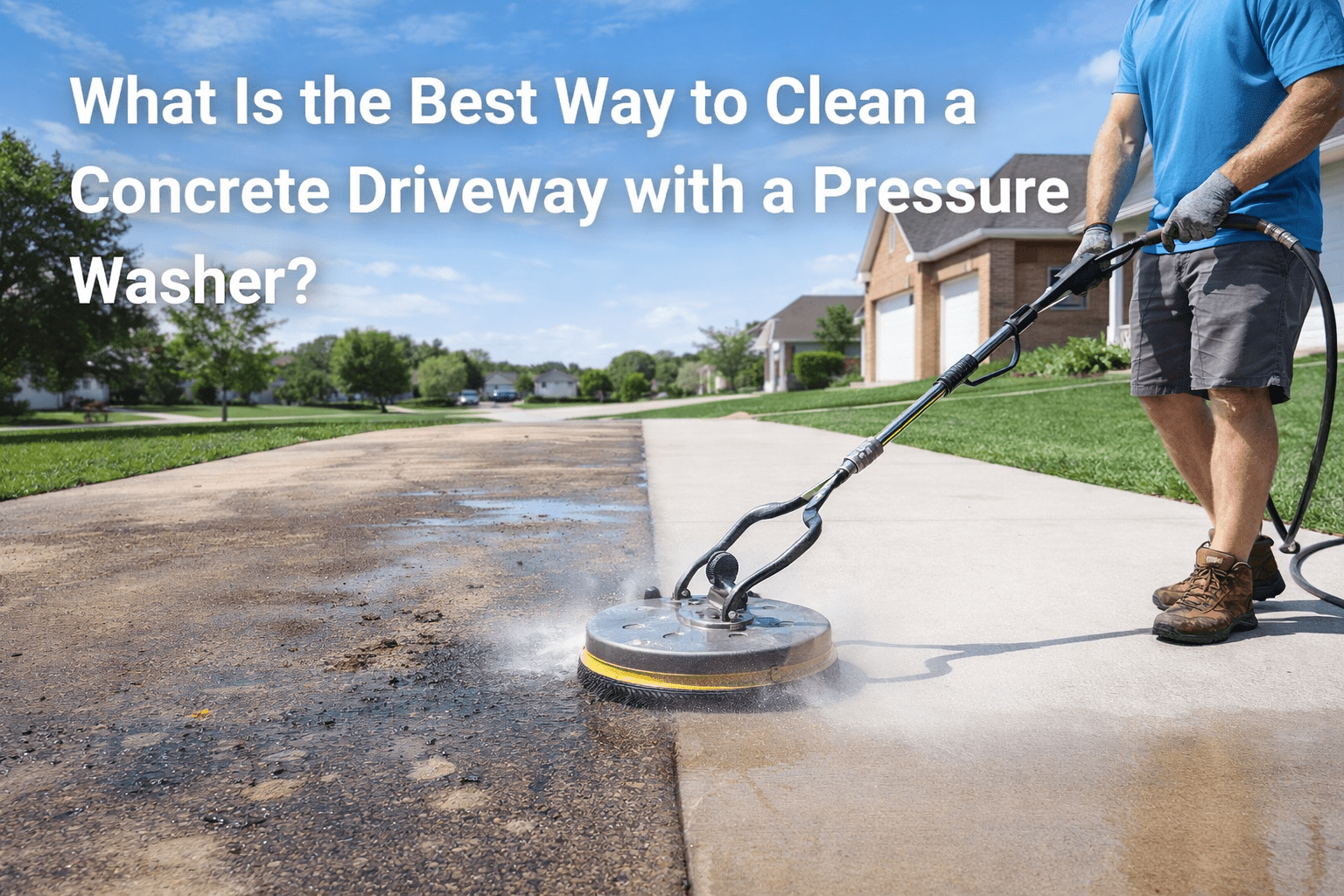
For larger driveways, a surface cleaner attachment can make the process faster and more uniform.
How to Remove Oil Stains from Concrete
Oil stains require extra attention.
- Apply a commercial degreaser
- Allow it to sit for the recommended time
- Scrub thoroughly with a stiff brush
- Pressure wash using a 15 or 25 degree nozzle
Some deep stains may need a second treatment. Concrete is porous, so oil can sink below the surface. Patience helps here.
How to Remove Rust Stains
Rust stains usually come from metal furniture or irrigation systems.
Use a rust remover designed specifically for concrete. Avoid harsh acids unless you are experienced, as they can discolor or weaken the surface. According to the Portland Cement Association, improper acid use can permanently damage concrete surfaces.
Apply the product, allow proper dwell time, and rinse thoroughly with your pressure washer.
How to Remove Tire Marks
Tire marks respond well to concrete cleaner and consistent pressure washing.
Apply cleaner to the area, let it sit briefly, then wash using overlapping strokes. You may need to repeat the process for darker marks.
Step 4: Rinse Thoroughly
Once you have cleaned all sections, rinse the entire driveway with clean water.
Make sure no cleaning solution remains on the surface. Residue can leave marks once it dries.
After rinsing, allow the driveway to dry completely. It should look noticeably brighter and more uniform in color.
Step 5: Consider Applying a Concrete Sealer
If your driveway is older or prone to staining, sealing it can help.
A quality concrete sealer:
- Reduces moisture penetration
- Makes future cleaning easier
- Helps prevent oil from soaking deeply into the surface
Only apply sealer after the concrete is completely dry. This step is optional but beneficial for long term protection. Learn about protecting your coastal home for additional protective measures.
Where Pressure Washing Goes Wrong
Even simple projects can go wrong.
Using Too Much Pressure
Excessive PSI can cause surface pitting. Once concrete is etched, it cannot be reversed.
Using the Wrong Nozzle
A 0 degree nozzle concentrates pressure into a tiny stream. It can permanently scar your driveway.
Skipping Pre Treatment
Oil and rust stains often require chemical loosening before washing. Skipping this step leaves stains behind.
Holding the Wand Too Close
Less than 6 inches from the surface increases the risk of etching.
Not Getting the Results You Expected? Let’s see what might be wrong.
Why Is My Driveway Streaking?
This usually happens due to uneven passes or inconsistent distance from the surface. Slow down and overlap your strokes.
Why Does the Surface Look Rough?
This is likely caused by too much pressure or holding the nozzle too close.
Why Are Stains Still Visible?
Deep stains may require multiple treatments or specialized cleaners.
Protect Yourself and Your Property
Pressure washers are powerful tools.
Wear eye protection. Keep your feet stable. Never spray toward people, pets, or electrical outlets. Avoid working on steep surfaces. According to the Occupational Safety and Health Administration (OSHA), high-pressure water can cause serious injuries.
Concrete cleaning is manageable, but safety should always come first.
Situations That Require Professional Help
There are situations where professional help makes sense.
- Very large driveways
- Heavy oil saturation
- Older concrete that may be fragile
- You are unsure about PSI settings
- You want sealing included
Professional equipment and experience can save time and prevent costly mistakes.
Understanding Concrete Types and Cleaning Needs
Different concrete finishes require different approaches:
- Standard Broom-Finish Concrete: Most common for residential driveways. Handles 3,000-3,500 PSI well. Use standard 25° nozzle.
- Stamped or Decorative Concrete: Requires lower pressure (2,000-2,500 PSI) and soft washing techniques to preserve surface patterns.
- Sealed Concrete: Previously sealed surfaces need gentler cleaning to preserve the sealer. May only need 2,000-2,500 PSI.
- Aged or Damaged Concrete: Older driveways with cracks or spalling require professional assessment before pressure washing.
Frequency: How Often Should You Clean Your Driveway?
General Guidelines:
- Annual cleaning: Standard for most residential driveways
- Bi-annual cleaning: For coastal properties with salt exposure
- Quarterly cleaning: For commercial driveways with heavy traffic
- As-needed: After oil spills or major staining events
Miami-Specific Considerations
South Florida’s climate presents unique challenges:
- Salt Air Exposure: Coastal driveways accumulate salt buildup that accelerates staining. Requires more frequent cleaning.
- High Humidity: Creates ideal conditions for mold and mildew growth in concrete pores.
- Intense UV Exposure: Sun damage can make concrete more porous over time, increasing staining susceptibility. Sealing becomes more important.
- Hurricane Season: Post-storm cleaning removes debris and prevents long-term staining.
Professional vs DIY Cost Comparison
DIY Costs:
- Pressure washer rental: $50-$100/day
- Cleaning chemicals: $20-$50
- Nozzles and attachments: $30-$60
- Water usage: $10-$20
- Your time: 4-8 hours for average driveway
- Total DIY: $110-$230 + your time + risk
Professional Service:
- Average residential driveway: $180-$280
- Includes proper equipment, insurance, expertise
- Completed in 1-2 hours
- Zero risk of surface damage
- Often includes pre-treatment and sealing options
Final Thoughts
Cleaning a concrete driveway with a pressure washer is not complicated. But it does require the right setup and technique.
Prepare properly. Use 3000 to 3500 PSI. Maintain a steady motion. Avoid extreme pressure. Pre treat stains. Rinse thoroughly.
Done correctly, your driveway can look almost new again.
If you would rather skip the equipment setup and ensure the job is handled safely and efficiently, Kleanway Cleaning Services can help. Their team has the tools and experience to clean concrete driveways thoroughly while protecting the surface from damage. Reach out to Kleanway Cleaning Services for professional driveway cleaning that restores your curb appeal without the guesswork.
Frequently Asked Questions
1. What PSI should I use to clean a concrete driveway?
For standard residential concrete, use a pressure washer set between 3000 and 3500 PSI. Heavily stained concrete may require up to 4000 PSI, but higher pressure should be used carefully to avoid surface damage.
2. Can I use a 0 degree nozzle on my driveway?
No. A 0 degree nozzle concentrates water into a very narrow stream and can cause pitting or permanent etching in concrete. A 25 degree nozzle is recommended for general driveway cleaning.
3. How far should I hold the pressure washer wand from the surface?
Keep the nozzle about 6 to 12 inches away from the concrete. Holding it too close can damage the surface, while holding it too far away may reduce cleaning effectiveness.
4. Do I need to use detergent when pressure washing concrete?
For light dirt, water alone may be enough. However, oil stains, tire marks, and deep grime usually require a concrete cleaner or degreaser for proper removal.
5. How do I remove old oil stains from my driveway?
Apply a commercial degreaser, let it sit for the recommended time, scrub with a stiff brush, and then pressure wash the area. Deep stains may require more than one treatment.
6. Can pressure washing damage concrete?
Yes, if done incorrectly. Using too much pressure, the wrong nozzle, or holding the wand too close can cause surface etching or pitting.
7. Why does my driveway look streaky after pressure washing?
Streaking usually happens when strokes are uneven or not overlapped properly. Maintaining consistent distance and using steady overlapping passes helps prevent this issue.
8. Is it better to use a surface cleaner attachment?
For larger driveways, a surface cleaner attachment can provide more even results and reduce streaking. It also speeds up the cleaning process.
9. Should I seal my driveway after pressure washing?
Sealing is optional but beneficial. A concrete sealer helps protect against moisture and future staining, and it can extend the life of your driveway.
10. When should I hire a professional instead of doing it myself?
Consider hiring a professional if your driveway is very large, heavily stained, older and fragile, or if you are unsure about proper PSI settings. Professional cleaning reduces the risk of accidental damage.